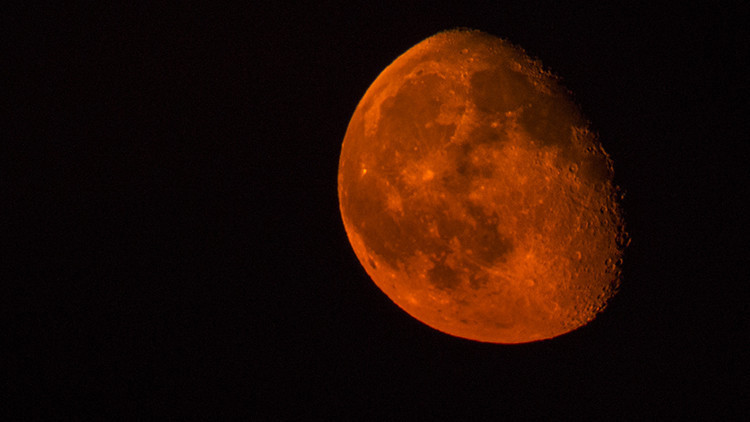

When the Sun, Earth and Moon align perfectly, our planet casts its shadow onto its natural satellite, cloaking the Moon in an eerie crimson glow. Known as a lunar eclipse, this event has fascinated humanity for thousands of years, inspiring myths, poetry and scientific exploration. On Sunday evening, millions of sky enthusiasts across continents turned their gaze upward to witness this rare astronomical performance.
The Eclipse Seen from Türkiye and Beyond
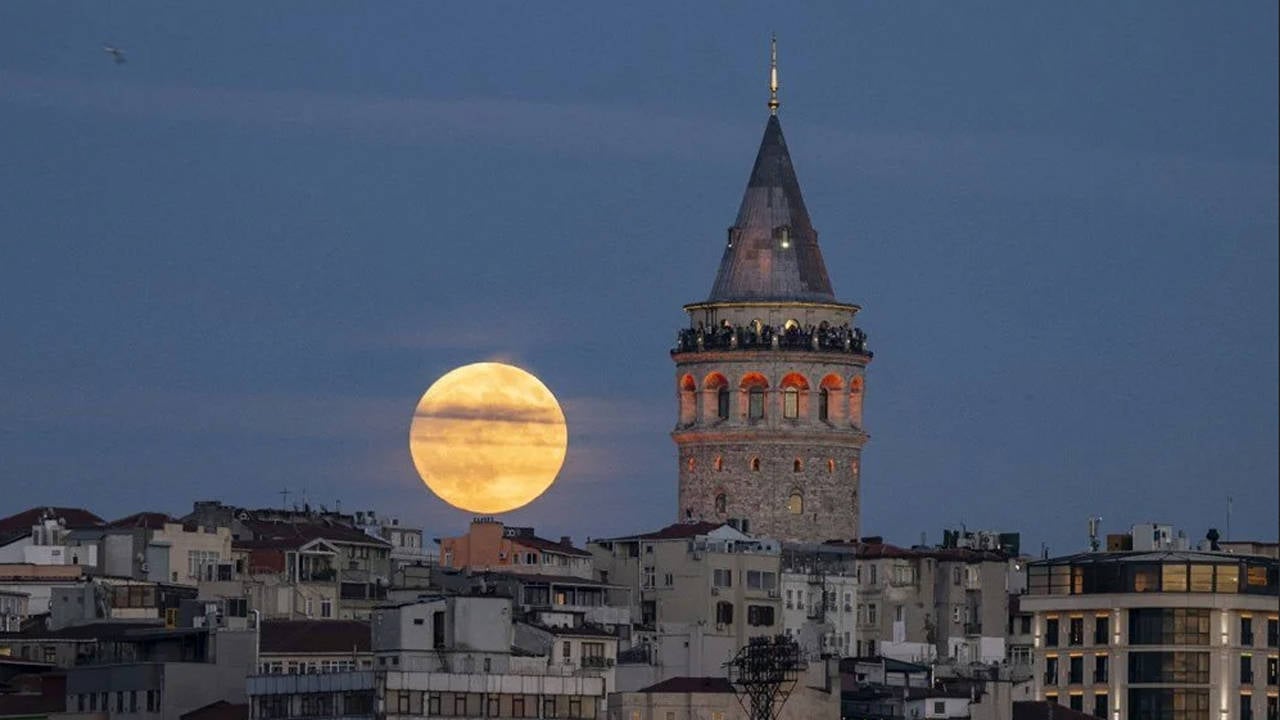
In Türkiye, the lunar eclipse was visible shortly after moonrise, though only partially. Observers in the eastern and southeastern regions had the clearest view. Local astronomy clubs, photographers and curious families gathered in open spaces to experience the sight, reinforcing once again how cosmic events bring people together regardless of culture or background.
Asia provided the most spectacular views. Reports highlighted that India and China were among the best vantage points for the full eclipse. Sky watchers along Africa’s eastern coast and parts of Western Australia were also fortunate to see the phenomenon clearly. In Europe and other parts of Africa, the Moon rose already partially eclipsed, allowing only a short glimpse. For the Americas, however, timing was unfortunate, and much of the continent missed the event altogether.
Why the Moon Appears Red
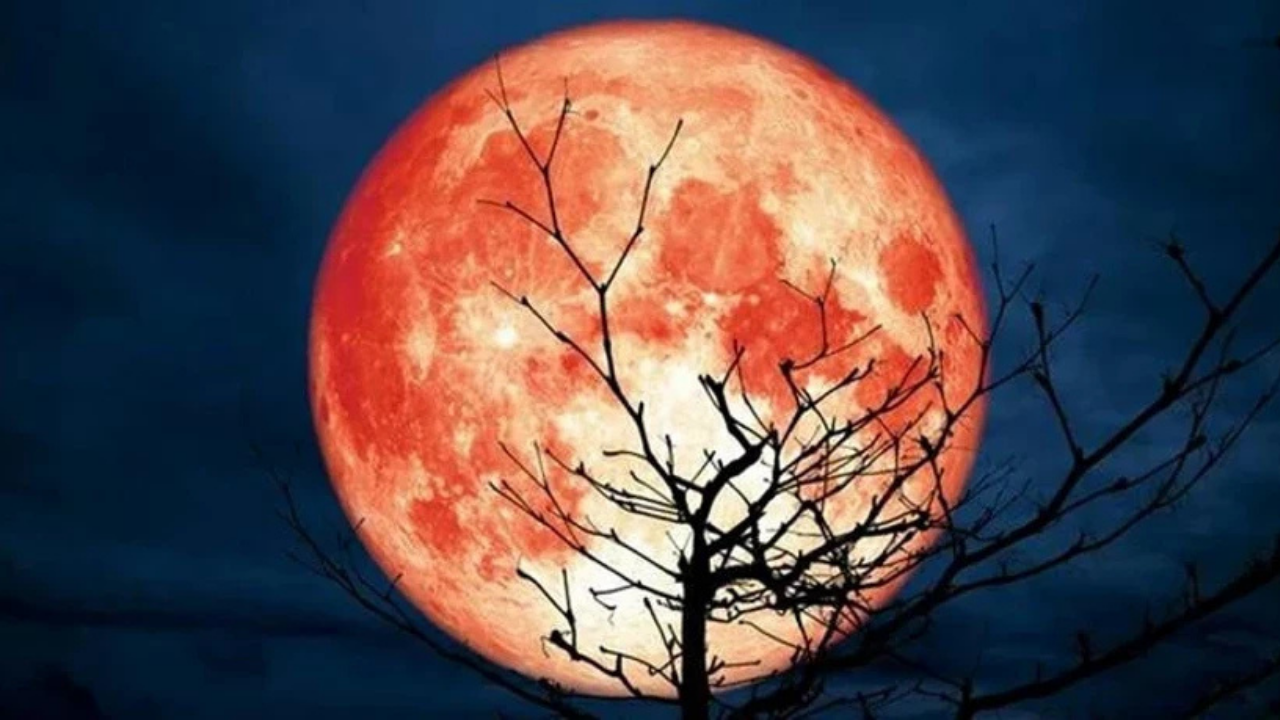
The striking red tint of the Moon during such an event is not a trick of imagination but a result of atmospheric science. Astrophysicist Ryan Milligan from Queen’s University Belfast explained that during an eclipse, the only sunlight that reaches the Moon first passes through Earth’s atmosphere. The air filters out shorter wavelengths like blue and green while allowing the longer red wavelengths to scatter through. The result is the famous “blood moon,” a name that resonates with both folklore and modern astronomy.
This process is the same reason sunsets and sunrises often glow orange or crimson. The Earth’s atmosphere bends and scatters light, wrapping the Moon in a soft red blanket that can vary in hue depending on atmospheric conditions, including dust, pollution and even volcanic ash.
Safe to Watch Without Equipment
One of the most appealing aspects of a lunar eclipse is its accessibility. Unlike solar eclipses, which require protective glasses or indirect viewing methods to avoid eye damage, a lunar eclipse can be observed safely with the naked eye. Enthusiasts are encouraged to step outside into a clear night and simply look up. Binoculars and telescopes enhance the view, revealing more detail in the shadow’s progression across the lunar surface, but they are not essential.
Astronomy groups worldwide often organize public events during eclipses, setting up telescopes in parks and city squares. These gatherings not only provide equipment but also foster community engagement with science. In Türkiye, several university observatories reported an increase in visitors eager to understand the event, proving that even in a digital age, people remain captivated by direct experiences of the cosmos.
The Rhythm of Eclipses in Human History
Throughout history, eclipses were regarded as powerful omens. Ancient cultures from Mesopotamia to the Americas associated them with divine messages, often fearing the blood-colored Moon as a sign of upheaval. Today, science has replaced superstition with understanding, yet the sense of awe persists. Modern observers may not fear eclipses, but they still carry emotional weight, reminding us of our place in the universe and the delicate balance that makes such alignments possible.
The predictability of eclipses also reflects the sophistication of astronomical calculations. Ancient astronomers, long before the invention of telescopes, could forecast these events with surprising accuracy. Today, with advanced computer models, scientists can predict eclipses centuries into the future, mapping their paths with pinpoint precision.
Looking Ahead to 2026
While the September lunar eclipse was the latest in a series of stunning displays, sky watchers are already anticipating the next major event. On August 12, 2026, a total solar eclipse will take place. Unlike a lunar eclipse, a solar eclipse occurs when the Moon passes directly between Earth and the Sun, casting a shadow onto our planet.
This upcoming eclipse is particularly significant because it will be the first total solar eclipse visible from mainland Europe since 2006. Experts say that the path of totality will cross only a narrow stretch of Spain and Iceland, making those countries the prime destinations for travelers eager to witness the full spectacle. Most of Europe, along with Türkiye, will still experience a partial eclipse, offering millions of people a chance to participate in this rare moment.
The path across Spain will span about 160 kilometers, but notably, major cities like Madrid and Barcelona fall outside the zone of totality. This is expected to create a surge of visitors to smaller towns along the path, potentially generating a significant boost in local tourism.
The Last Great Solar Eclipse
The last total solar eclipse took place in April 2024, gracing the skies of North America. It drew millions of observers, from seasoned astronomers to curious first-timers. Cities and towns along the path of totality reported record levels of tourism, as travelers poured in to experience the brief but breathtaking plunge into daytime darkness. The 2026 event is expected to generate similar excitement, particularly in Europe where opportunities to see a total solar eclipse are rare.
The Cultural Impact of Celestial Events
Astronomical events like eclipses are more than just scientific curiosities. They often become cultural touchstones, inspiring art, literature and even political symbolism. The “blood moon” in particular has appeared in countless stories, from ancient prophecies to modern films, as a metaphor for change or transformation.
In Türkiye, as in many other countries, eclipses spark a wave of online sharing. Social media platforms fill with photographs, amateur time-lapse videos and poetic reflections. For younger generations, these events can be gateways to science, encouraging curiosity about the universe and the disciplines that study it. Teachers often use eclipses as teaching moments, linking the drama of the skies to classroom lessons in physics and history.
An Invitation to Look Up
What makes an eclipse remarkable is not only its rarity but also its universality. Unlike many natural phenomena confined to specific climates or regions, eclipses transcend borders. They are reminders that despite our differences, humanity shares a single vantage point under the same sky.
For those who missed the latest lunar eclipse, there is comfort in knowing that more opportunities lie ahead. The cycles of celestial mechanics ensure that eclipses, though rare, are inevitable. Each one offers a chance to pause daily routines, step outside and reconnect with the wider universe.
Editorial Note
As observers in Türkiye joined millions worldwide in watching the Moon turn red, it became clear once again that cosmic events have the power to unite. Beyond scientific explanation, the beauty of an eclipse is in the shared human experience. Whether standing in a rural village with a clear horizon or gazing through city lights, people looked up together, captivated by a sky that still holds mysteries.