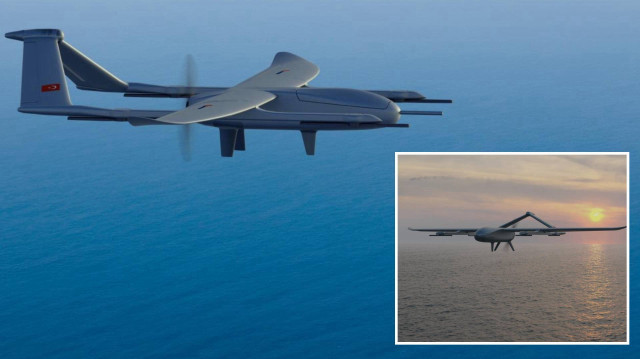

The defense industry in Türkiye is entering a new era of innovation as naval vessels and unmanned maritime platforms are set to gain unprecedented capabilities through the integration of vertical takeoff and landing (VTOL) fixed-wing drones. This initiative, led by HAVELSAN, signals a strategic leap in strengthening maritime surveillance, intelligence, and operational reach.
HAVELSAN, one of the leading companies in Türkiye’s defense sector, has been developing unmanned systems since 2019 at its dedicated Robotics and Autonomous Systems Center. The company has built an ecosystem where air, land, and sea platforms operate in coordination, reflecting not only technological ambition but also a vision for comprehensive security solutions.
VTOL Drones Designed for Complex Naval Missions
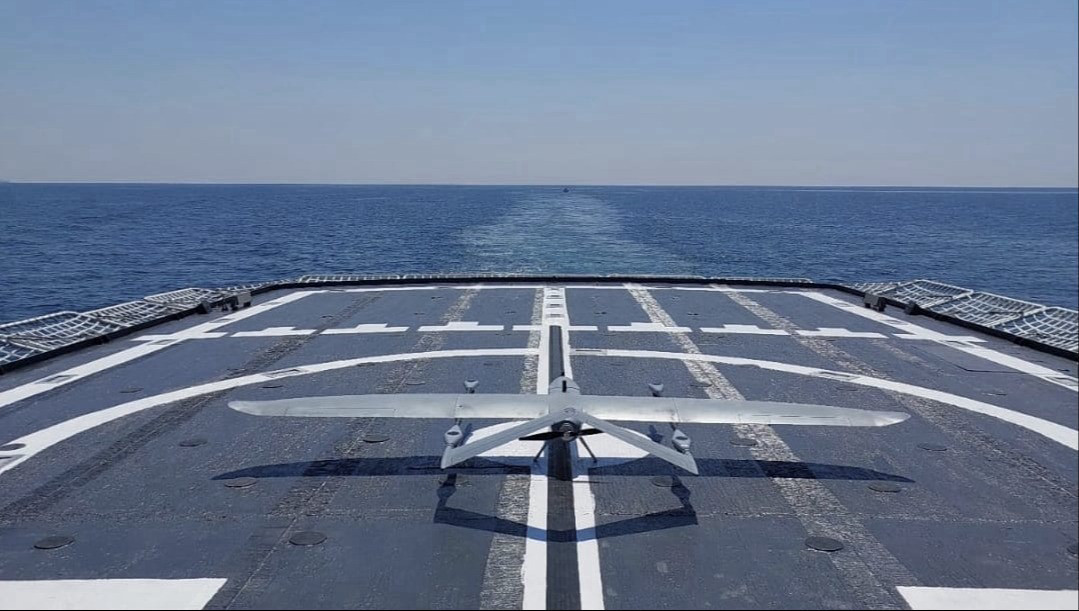
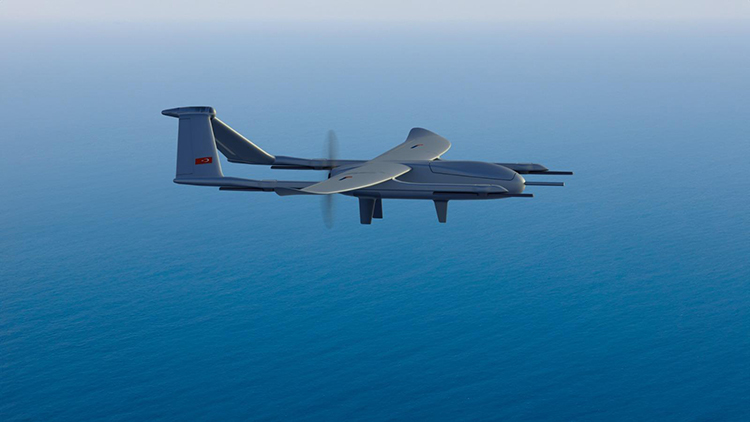
The company’s most notable aerial systems—BAHA, BOZBEY, and BULUT—are designed to perform both independently and in coordination with naval and land-based platforms. Their VTOL capability allows them to operate without the need for runways, making them ideal for naval operations where space is limited.
Recent trials demonstrated that these drones could be seamlessly integrated with naval ships and unmanned sea vehicles. Each platform offers unique endurance and payload capacity:
BULUT carries 5 kilograms and can remain airborne for 6 hours.
BOZBEY carries 3 kilograms and flies for 6 hours.
BAHA carries 2 kilograms and sustains missions for 2 hours.
This flexibility means that naval fleets can choose the right drone for specific missions, whether long-range surveillance or rapid intelligence gathering close to shore.
Expanding Maritime Operational Reach
By launching directly from ships, BAHA, BOZBEY, and BULUT extend the operational perimeter of naval vessels. These drones provide reconnaissance, surveillance, and intelligence-gathering capabilities far beyond the visual range of the ship, enabling forces to maintain situational awareness even in remote waters.
The drones’ modular architecture allows for the integration of different payloads, including advanced sensors, thermal cameras, and communication equipment. This adaptability ensures that the same drone can be repurposed for different operations—border security, search and rescue, disaster response, or electronic warfare.
Such versatility is critical as modern naval forces require multi-role systems that can respond to evolving threats without the need for entirely new platforms.
First Export Mission in Malaysia
HAVELSAN’s ambitions extend beyond Türkiye’s borders. In a significant breakthrough, the company signed an agreement with DESAN Shipyard to integrate the BOZBEY UAV system into a 99-meter Multi-Purpose Mission Ship being supplied to the Malaysian Maritime Enforcement Agency (MMEA).
This marks the first international deployment of HAVELSAN’s fixed-wing VTOL UAVs on a naval platform. The contract not only covers the delivery of the drones but also includes training, logistics, and lifecycle support, ensuring the Malaysian Navy gains long-term operational value.
With BOZBEY on board, the ship will gain long-range reconnaissance capabilities, enhancing maritime intelligence and deterrence. The drone will be able to conduct precise takeoffs and landings on the vessel’s deck and transmit live imagery and coordinates back to the onboard control station—even when the ship’s line of sight is obstructed.
Strategic Gains for Naval Forces
The integration of HAVELSAN’s drones into naval operations provides significant strategic advantages. Their ability to function in cloudy, nighttime, or adverse weather conditions ensures continuous surveillance. Equipped with robust communication systems, they can transfer control from one ground station to another, maintaining uninterrupted mission flow over long distances.
In electronic warfare environments, these drones are designed to resist jamming and interference, ensuring mission reliability even under hostile conditions. For coastal and border security, the drones can scan wide areas independently of the ship, giving commanders an extended eye over contested waters.
Beyond defense, these UAVs are highly effective in humanitarian operations. In disaster scenarios where access is limited, the drones can be launched from ships to assess damage, locate survivors, and support rescue missions. This dual-use capability highlights the growing role of military-grade drones in civil applications.
Integrating Command and Control Systems
A major differentiator in HAVELSAN’s approach is the development of a comprehensive command and control system that synchronizes UAVs with naval and land platforms. This integration allows air, sea, and ground units to operate as a unified force, streamlining data flow and improving response times.
The ability to coordinate assets across different domains is increasingly vital for modern navies, where multi-layered threats—from piracy to cyber-attacks—require rapid adaptation. HAVELSAN’s ecosystem ensures that information collected by drones can be shared instantly with command centers and other allied platforms, creating a common operational picture.
Reshaping the Future of Naval Defense
The progress made by HAVELSAN underscores Türkiye’s rising role in the global defense landscape. By combining indigenous innovation with export partnerships, the company is positioning itself as a key supplier of advanced autonomous systems.
For navies worldwide, the integration of VTOL UAVs presents not only a technological enhancement but also a shift in doctrine. Ships are no longer limited to their onboard sensors and manned reconnaissance units; they can now deploy swarms of drones to monitor vast maritime zones, deter threats, and respond to emergencies with unmatched speed.
As HAVELSAN continues to refine its platforms, new missions will likely emerge, ranging from anti-submarine warfare to electronic intelligence. The adaptability of BAHA, BOZBEY, and BULUT ensures they can evolve alongside operational needs, safeguarding naval interests in an increasingly contested global environment.
Editor’s Note: This report reflects the growing intersection between advanced robotics and maritime security. HAVELSAN’s UAVs not only enhance Türkiye’s defense capabilities but also signal a global trend toward integrating autonomous systems in naval operations.