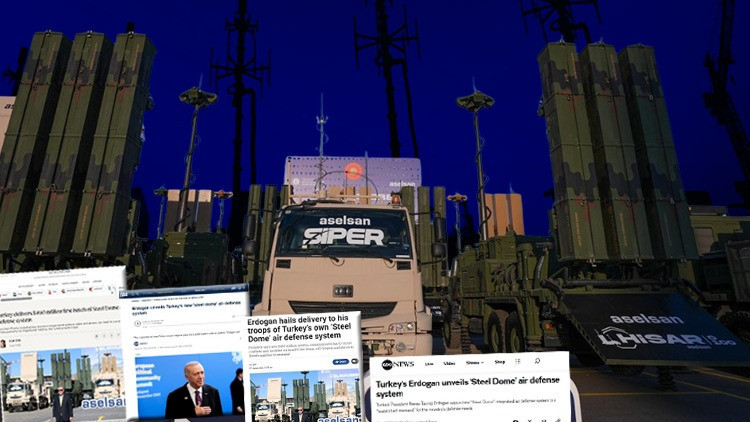

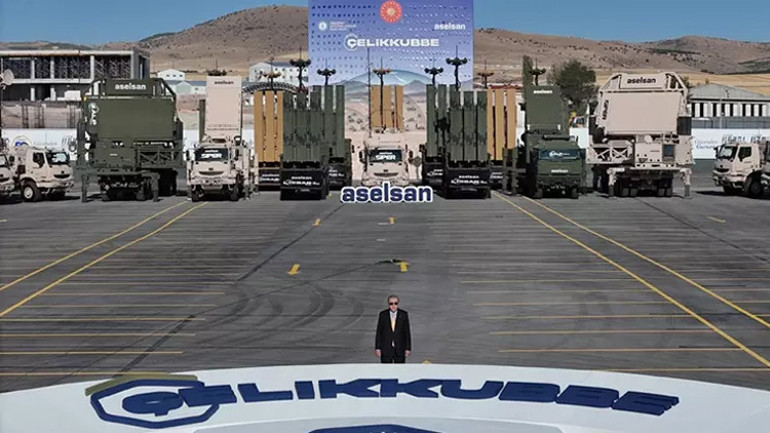
In a powerful demonstration of military progress and industrial independence, Türkiye has launched a new chapter in its defense strategy by officially introducing the Steel Dome air defense system, inaugurating 14 new ASELSAN facilities, and laying the foundation of the Oğulbey Technology Base, which is poised to become the country’s largest defense campus.
These three strategic moves—announced at the “Laying the Foundations for the Next 50 Years” ceremony held at Gölbaşı—are expected to reshape Türkiye’s defense capabilities and global standing in the high-tech military arena. Speaking at the event, President Recep Tayyip Erdoğan emphasized that these steps would not only strengthen the Turkish Armed Forces (TSK), but also elevate Türkiye’s defense industry into a new global tier.
A Trifecta of Strategic Achievements
During his speech, Erdoğan described the day as “a milestone not just for ASELSAN but for the entire Turkish nation’s journey toward independence and technological sovereignty.”
The president outlined the event’s significance in three major developments:
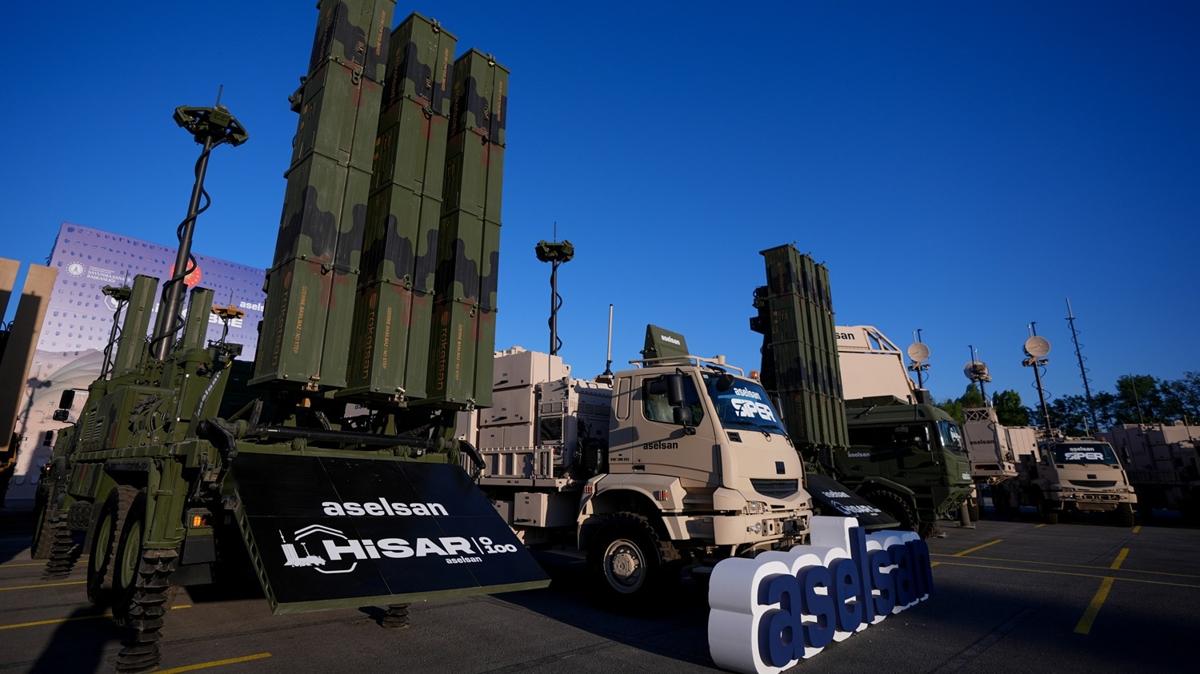
Steel Dome Delivery: A next-generation integrated air defense system composed of 47 core components.
ASELSAN’s Facility Expansions: The official opening of 14 new high-tech production and research buildings.
Oğulbey Technology Base: Groundbreaking of Türkiye’s largest-ever defense investment, valued at $1.5 billion.
These initiatives come at a time when Türkiye is ramping up defense spending and focusing heavily on self-reliance in security technologies amid rising regional tensions and evolving global threats.
Steel Dome: Türkiye’s Answer to Layered Air Defense
The Steel Dome system, which Erdoğan described as a “turning point in air defense,” has drawn significant international attention for its scope and ambition. Inspired by global systems such as Israel’s Iron Dome, Türkiye’s version is designed with indigenous radar, sensor, and targeting technologies tailored to its specific defense doctrines.
Consisting of 47 integrated vehicles, the system is built to create a multi-tiered shield against aerial threats, including missiles, drones, and manned aircraft. According to defense officials, the system will unify land- and sea-based platforms under a centralized command-and-control network.
President Erdoğan declared:
“Before coming to the stage, I personally inspected the system. It was nothing short of a power display. We are entering a new era in air defense.”
International Media Reacts: From Strategic Shift to Global Recognition
The launch drew significant coverage from global media outlets, each emphasizing different aspects of Türkiye’s growing military-industrial footprint:
ABC News (USA) called the event a “defense milestone” and highlighted the Steel Dome’s role in integrating land and naval air defense assets.
Al Monitor (USA) reported that the initial delivery—valued at $460 million—includes over 40 operational units, forming the backbone of Türkiye’s future air defense network.
ERT News (Greece) emphasized Erdoğan’s remarks on strategic autonomy, quoting him as saying, “The fine line between being at the table and being on the menu is air defense.”
i24 News (Israel) highlighted the project’s ambition to provide multi-layer protection for Turkish airspace, suggesting the system aims to mirror or surpass the capabilities of Israel’s Iron Dome.
Xinhua (China) noted that the delivery “elevates Türkiye into a new league” of defense players, with President Erdoğan stating, “No country can claim a secure future without developing its own air defense systems.”
Times of Israel quoted Erdoğan’s strong declaration: “Steel Dome will give our friends confidence and instill fear in our adversaries.”
Reporter (USA) praised the opening of the Oğulbey base, describing it as Türkiye’s most significant defense investment to date, with critical functions in radar, sensors, and electronic warfare.
Oğulbey Technology Base: Türkiye’s Largest Defense Campus
The newly laid foundation for the Oğulbey Technology Base is set to be a game-changer. Valued at $1.5 billion, the facility will become the heart of Türkiye’s high-tech military research and development. It will host laboratories for radar systems, advanced sensors, communication modules, and more.
The facility is designed to be the engine behind Türkiye’s next-generation combat systems, potentially housing programs for AI-driven defense technologies, counter-drone systems, and electronic warfare innovations.
The strategic importance of the campus also lies in its integration with Türkiye’s growing domestic production ecosystem—offering an end-to-end solution from research to deployment.
ASELSAN’s Expanding Footprint
Founded in 1975, ASELSAN has become the flagship of Türkiye’s defense technology ecosystem. With the opening of 14 new facilities, the company now stands at the forefront of indigenous capability development across a range of domains—from ground radar and communication networks to satellite electronics and sensor technologies.
President Erdoğan praised the company’s 50-year legacy and its contribution to national sovereignty:
“On this historic day, we witness not only ASELSAN’s expansion but the nation’s relentless pursuit of technological independence.”
ASELSAN’s market value has surged in recent months, reflecting investor confidence in the company’s central role in the modernization of the Turkish Armed Forces and its increasing export footprint.
Broader Context: A National Strategy of Defense Independence
Türkiye’s emphasis on defense autonomy is part of a broader policy trajectory aimed at reducing reliance on foreign suppliers, particularly amid geopolitical friction and shifting alliances. The development of domestic air defense, drone warfare systems, and naval platforms signals a strategic reorientation.
While NATO membership remains a cornerstone of Türkiye’s foreign policy, the country is clearly investing in independent capabilities that allow for regional leadership and flexible responses in a multipolar world.
“No longer dependent, Türkiye is now a producer, a developer, and a defender of its own destiny,” said a Turkish defense policy analyst. “Steel Dome is not just hardware—it’s a declaration.”
Looking Ahead: 2030 and Beyond
The Steel Dome system is expected to become fully operational by the early 2030s, with phased deployment and integration continuing throughout the rest of the decade. The system’s architecture allows for upgrades and modular expansion—an approach that aligns with evolving threat landscapes.
In the coming years, Türkiye plans to enhance interoperability with other national systems, integrate AI and machine learning into its detection and response networks, and expand exports to allied nations looking for cost-effective, high-performance solutions.
Editor’s Note
As Türkiye turns a bold page in its defense narrative, the unveiling of the Steel Dome system and the strategic investments in ASELSAN and Oğulbey represent more than just national pride—they represent a shift in the balance of capability, autonomy, and ambition. With eyes on the future, Türkiye is setting its own course—armed with technology, vision, and intent.