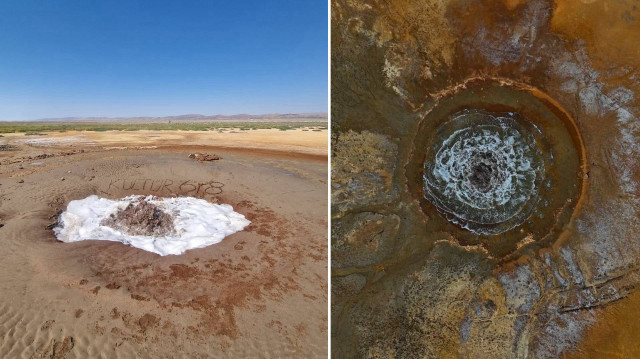

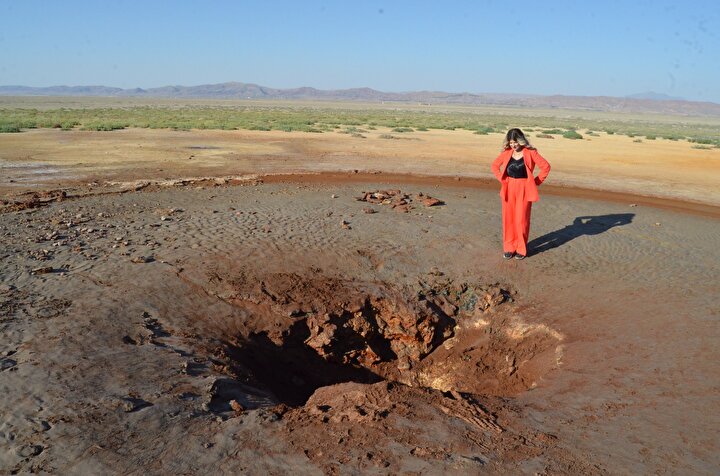
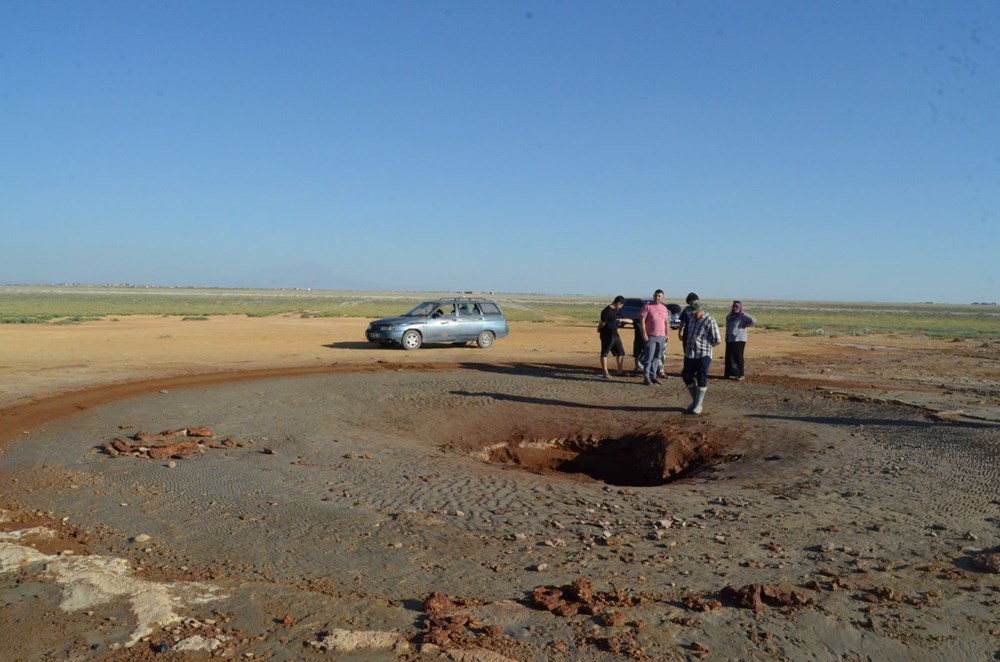
In the agricultural fields of Yeşilova, located within the Tuz Gölü basin, a remarkable natural phenomenon has been unfolding for over a year. Groundwater periodically surges upward, spreading across an area approximately 15 meters in diameter before suddenly retreating and disappearing.
According to geological experts, the phenomenon is not linked to traditional hot-water geysers but to carbon dioxide emissions beneath the surface. This unique activity, described as a “cold water geyser,” is being hailed as a rare geological event and possibly the only one of its kind in Türkiye.
The Role of Hasan Dağı
Geological Engineer Nurcan Özdemir explained that the formation is closely tied to Hasan Dağı, one of Türkiye’s youngest volcanoes, located near the Tuz Gölü basin. While classic geysers typically form through geothermal activity where magma heats water until it erupts, this cold water geyser is caused by carbon dioxide mixing with underground water.
“At first, the carbon dioxide gas appears as small bubbles within the groundwater. As the gas pressure increases, it pushes the water upward, creating a fountain-like eruption. It’s very similar to opening a soda bottle and watching the liquid fizz and spurt out,” Özdemir noted.
This distinction makes the phenomenon highly unusual. Whereas traditional geysers are powered by heat, here the force comes from trapped gases beneath the Earth’s surface.
A Geological Heritage Site in the Making
Experts believe that the formation should be considered a geological heritage site. “Türkiye does not have natural geysers, so this cold-water geyser is unique. People should come and see it. It is a completely natural event, and in my opinion, it will continue until the underground water is depleted,” Özdemir said.
The Tuz Gölü basin, known for its vast salt lake, has long been studied for its geological and hydrological features. The appearance of this geyser adds another layer of scientific and cultural value to the area.
The Connection Between Salt, Groundwater, and Carbon Dioxide
The cold-water geyser also reflects broader changes in the region’s groundwater system. With agricultural wells and industrial usage putting pressure on underground reserves, unusual flows are being observed.
“Some 300-meter wells are already encountering salty water due to reduced groundwater levels. This geyser also contains traces of saline water, visible in the surrounding soil. It shows that groundwater is being altered in both direction and composition,” Özdemir explained.
These shifts have had practical consequences for local farmers. Fields that once grew sunflowers are now being converted into solar energy farms, as changing water dynamics make agriculture more challenging.
Scientific and Environmental Importance
The discovery offers scientists an opportunity to study how carbon dioxide emissions interact with underground aquifers. Such processes are not only rare but also provide valuable insights into volcanic activity, groundwater management, and environmental sustainability.
Hasan Dağı’s volcanic influence is particularly significant. While the volcano has been dormant for centuries, its geological activity continues to shape the surrounding environment. The presence of both hot springs and this cold water geyser in the region highlights the diversity of hydrothermal and gas-driven phenomena linked to Türkiye’s volcanic landscapes.
Looking Ahead
The Tuz Gölü cold water geyser is expected to remain active for as long as groundwater and carbon dioxide continue to interact beneath the surface. However, experts warn that ongoing depletion of underground reserves could eventually cause the phenomenon to disappear.
Local authorities and scientists are being encouraged to protect the site, both as a natural wonder and as a potential tourist attraction. For Türkiye, which has no other known geysers, this unique formation represents not only a scientific treasure but also a symbol of the country’s dynamic geological heritage.