
Starbucks has released its financial results for the fiscal third quarter of 2025, covering the three-month period ending June 29. While the global coffee chain reported a modest increase in total revenue, the data also reflects deeper challenges facing the company—most notably, a sustained decline in comparable store sales and significant drops in profitability.
Global comparable store sales decreased by 2 percent during the quarter, marking the sixth consecutive quarter in which Starbucks has reported negative or stagnant growth in its core sales metric. North America and the United States, long considered Starbucks’ most resilient markets, also recorded a 2 percent decrease in comparable store sales. On the international front, performance remained largely flat, with the notable exception of China, where sales rose by 2 percent.

Revenue Growth Fails to Offset Sharp Profit Decline
Despite the declining same-store sales, total revenue for the quarter rose by 3.8 percent year-over-year to $9.5 billion. However, this increase was not enough to shield the company from a dramatic drop in profitability. Net income for the quarter fell by 47.1 percent, landing at $558.3 million—down sharply from the previous year.
Earnings per share (EPS) also reflected the decline, falling from 93 cents to 49 cents—a staggering 47.3 percent reduction. Analysts attributed the disparity between revenue growth and profit decline to a combination of rising operational costs, market turbulence, and reputational pressures.
Geopolitical Fallout and Global Boycotts Impact Brand Value
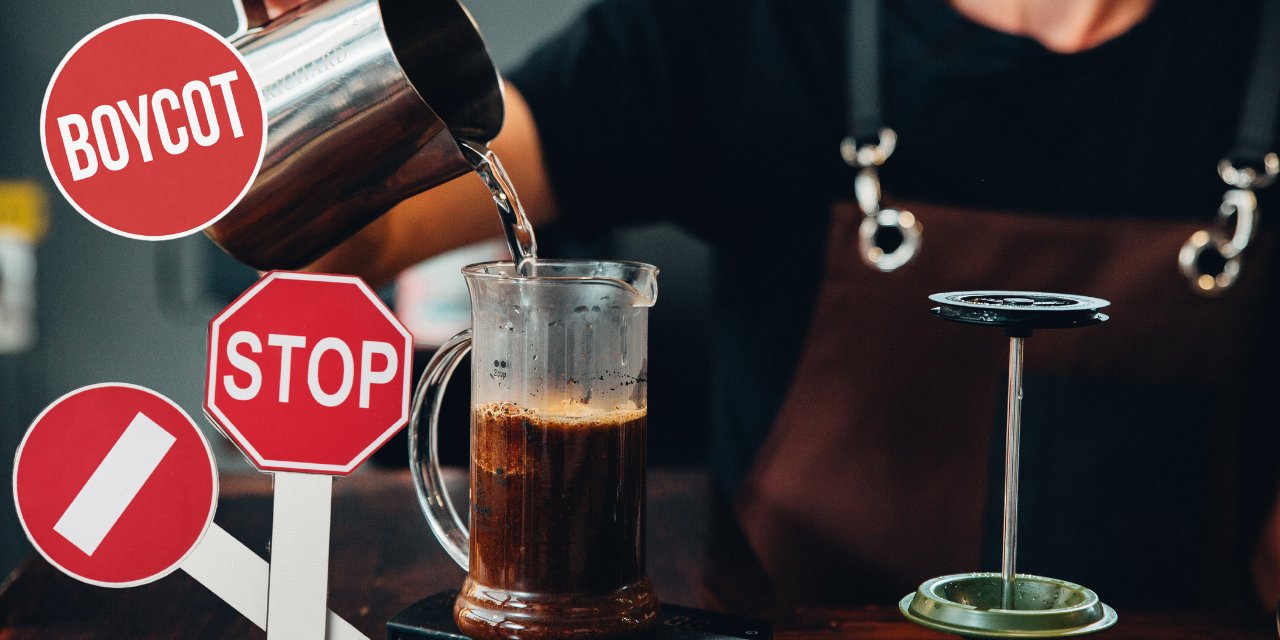
One of the more significant external factors weighing on Starbucks’ performance is its involvement in ongoing geopolitical controversies. The company has faced mounting boycotts and protests in various regions, particularly in connection with Israel’s military actions in Gaza.
Consumer backlash, especially in Middle Eastern and Muslim-majority markets, has reportedly led to diminished foot traffic and brand disengagement. Though Starbucks has repeatedly stated that it does not take sides in political conflicts, its perceived affiliations have nonetheless affected public sentiment.
The backlash has not been confined to a single region. Social media campaigns calling for global boycotts have gained momentum, placing additional pressure on the company’s international operations.
China Remains a Bright Spot Amid Global Headwinds
Amid the broader decline, China offered a rare moment of optimism for Starbucks. Comparable store sales in the country increased by 2 percent—a notable contrast to the stagnation seen elsewhere. China remains a vital market for Starbucks, both in terms of long-term growth potential and strategic diversification.
Analysts have highlighted Starbucks’ localized strategy in China, including culturally tailored menus, digital integration with platforms like WeChat, and aggressive store expansion in Tier 2 and Tier 3 cities. These efforts appear to be paying off, even as geopolitical tensions continue to complicate global business strategies.
Strategic Shifts Expected as Company Faces Investor Pressure
The recent earnings report is expected to intensify scrutiny from investors and analysts, many of whom are now calling for a reassessment of Starbucks’ global strategy. With operating margins narrowing and EPS slipping sharply, the company will be under pressure to restore profitability and renew consumer trust.
Starbucks may need to focus on:
Strengthening community engagement to address reputational damage
Streamlining supply chains to mitigate rising costs
Accelerating innovation in product offerings and in-store experiences
Reevaluating regional expansion plans in markets affected by boycotts
CEO Laxman Narasimhan has not yet outlined a revised strategy but acknowledged in a recent earnings call that the company must “listen carefully, act responsibly, and rebuild trust where necessary.”
Consumer Preferences Shift Toward Local and Ethical Brands
Starbucks’ challenges are also symptomatic of broader consumer behavior shifts. Globally, younger demographics are increasingly aligning their spending habits with ethical values, often favoring local, transparent, and socially responsible brands.
In Türkiye and across many emerging markets, independent coffee chains and regional brands have gained market share by offering unique experiences, local sourcing, and stronger community ties. This dynamic puts additional pressure on global chains like Starbucks to localize and humanize their operations.
Can Starbucks Rebound?
The next fiscal quarter will be critical for Starbucks. The company will need to demonstrate that its business fundamentals remain strong and that it can adapt to the geopolitical and cultural complexities of operating in diverse global markets.
Whether through digital transformation, new product lines, or community outreach efforts, Starbucks must address the root causes of its brand erosion and declining store performance. Investors and stakeholders alike will be closely watching to see how the company responds.