
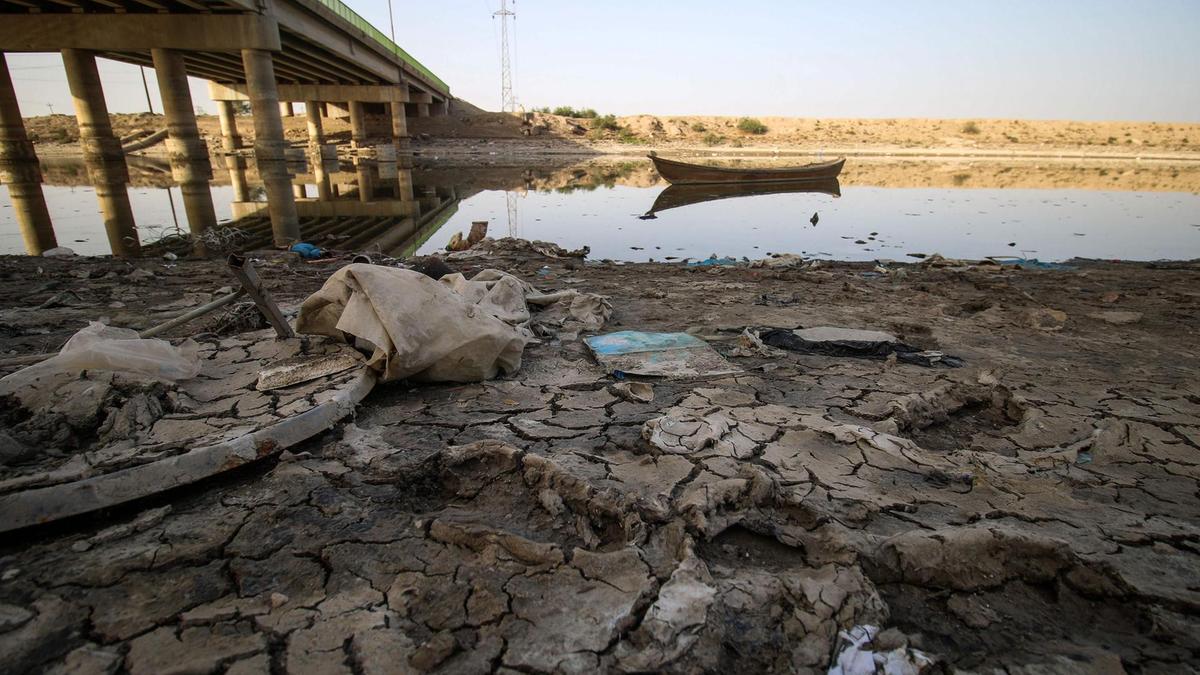
As the climate crisis deepens, new data reveals an unprecedented global shift that threatens freshwater security on a continental scale. A comprehensive study led by Arizona State University and published in the journal Science Advances confirms that four vast “mega drought” zones have emerged across the Northern Hemisphere. These regions, suffering from long-term extreme dryness and unsustainable groundwater use, are rapidly expanding, putting billions of people at risk of severe water scarcity.
The findings, based on more than two decades of satellite observations, underline a critical message for the future of freshwater: the Earth is drying at a rate never seen before, and unless urgent global water policies are implemented, humanity may face a freshwater collapse of catastrophic proportions.
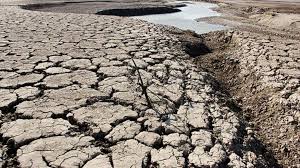
Four Mega Drought Zones Identified in the Northern Hemisphere
The study utilized data from NASA’s GRACE and GRACE Follow-On missions, spanning the years 2002 to 2023. By analyzing terrestrial water storage levels globally, researchers uncovered dramatic declines, particularly in groundwater reserves.
The research pinpoints four major drought zones in the Northern Hemisphere that now span continental scales. These include areas in North America, Europe, Central Asia, and parts of East Asia. All are experiencing rapid reductions in water availability due to the combined effects of climate change, excessive groundwater extraction, and persistent drought.
According to the study, 68 percent of the terrestrial water loss since 2002 stems from groundwater depletion. This loss alone has contributed more to sea level rise than melting ice sheets in Greenland and Antarctica combined.
Dry Regions Expanding at Alarming Speeds
One of the most startling revelations from the study is the pace at which arid regions are spreading. Each year, dry zones expand by an area roughly twice the size of California. Meanwhile, wet regions are also drying out, reversing long-established hydrological balances across continents.
The researchers warn that this pattern is fundamentally altering global water cycles, leading to increased water insecurity in both traditionally dry and formerly water-rich areas. Already, 101 countries representing 75 percent of the world population have experienced significant freshwater loss over the past 22 years.
Groundwater Loss Now a Major Driver of Sea Level Rise
While melting glaciers and polar ice caps have long been known contributors to sea level rise, this study highlights that groundwater extraction has become a more significant factor. As aquifers are drained for agriculture, drinking water, and industrial use, the lost water eventually ends up in the oceans, accelerating global sea level increase.
This often-overlooked driver of climate change-related impacts now demands the same level of attention as carbon emissions and glacial melt. Without intervention, the feedback loops between water depletion, climate stress, and sea level rise could intensify in the coming decades.
A Tipping Point for Global Water Security
Jay Famiglietti, lead author of the study and professor at ASU’s School of Sustainability, emphasized the urgency of the findings.
“These results may deliver the most alarming message yet about how climate change is affecting global water resources. Continents are drying, freshwater availability is declining, and sea level rise is accelerating. Continued overuse of groundwater could jeopardize food and water security for billions,” Famiglietti stated.
He urged governments, institutions, and communities to act immediately, saying, “This is a moment when everyone must step up. We need global collaboration and swift action on water security.”
Why the Northern Hemisphere Is the Most Affected
The research revealed that since 2014, the majority of newly forming drought zones have been concentrated in the Northern Hemisphere. Increasing drought in Europe and the mid-latitudes is a key factor. In contrast, some previously wetter areas in the Southern Hemisphere are also showing signs of drying, though at a slower rate.
Researchers believe that this uneven distribution may stem from industrial and agricultural development patterns, climate anomalies, and unequal water governance policies.
Satellite Data Tells the Unseen Story
The study’s groundbreaking insights come from satellite-based gravity measurements, which allow scientists to detect changes in mass—including water—beneath the Earth’s surface. GRACE and GRACE-FO missions, a collaboration between the United States and Germany, have monitored variations in water storage across continents with unprecedented precision.
These space-based observations provide a global view that cannot be achieved through ground-level monitoring alone, especially in regions where hydrological data is scarce or politically sensitive.
Implications for Agriculture, Cities, and Stability
Freshwater is the foundation of agriculture, industry, and daily life. A large portion of the world’s food production relies on irrigation, much of which is supplied by groundwater. As aquifers shrink, food production will face rising costs and declining yields.
Urban centers, particularly in water-stressed countries, are also increasingly dependent on underground water sources. Without alternative water supply infrastructure, these cities face the risk of water shortages, public health crises, and potential social unrest.
Additionally, transboundary water tensions could intensify as neighboring regions and countries compete for diminishing resources.
Call for Global Water Governance
Experts involved in the study stress the need for immediate, coordinated international policies on water usage and conservation. Key recommendations include:
Monitoring and regulating groundwater extraction at national and international levels
Investing in water-efficient technologies for agriculture and industry
Protecting natural water sources and recharging aquifers
Expanding public education campaigns on water conservation
Establishing global treaties focused specifically on freshwater security
Looking Ahead
With the global population projected to grow for another 50 to 60 years, and water resources continuing to decline, the world is at a crossroads. The choice is between continuing unsustainable practices or reshaping policies and behavior for long-term water resilience.
This study is a stark reminder that climate change is not a distant threat. It is happening now, beneath our feet and in the water we drink. Only through shared responsibility and bold, science-based decision-making can we avert a future where water becomes a luxury rather than a right.