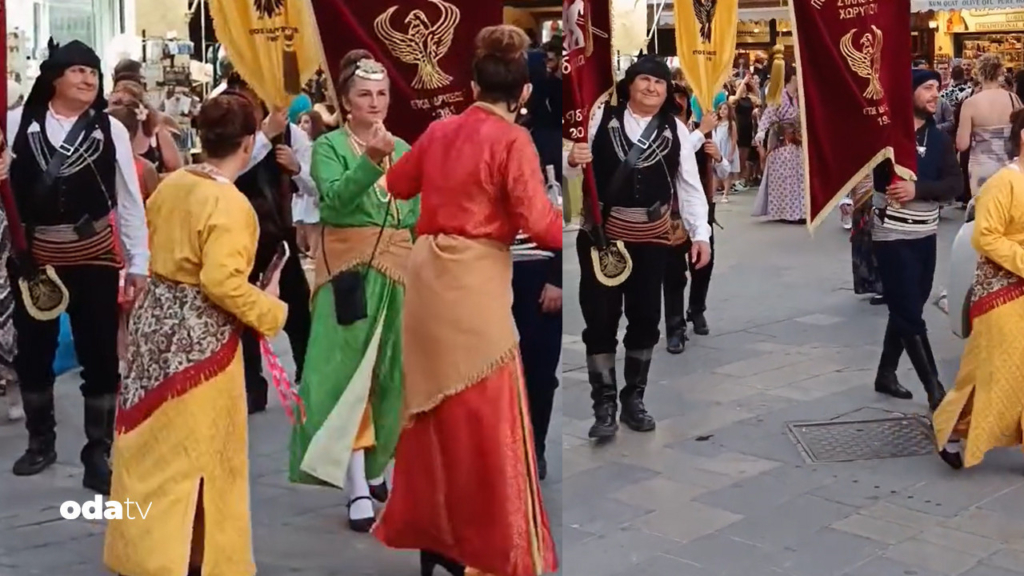

A viral video on TikTok has recently drawn international attention to the Corfu Folklore Festival, held annually on the Greek island of Corfu. The short clip, which quickly spread across social media platforms, showcased men dressed in striking traditional costumes featuring black headgear, silver chains, and bullet belts. For many viewers, these outfits instantly evoked the traditional clothing styles of the Black Sea region, especially the cultural attire connected with communities from Türkiye and its northern coast.
The scene, though seemingly ordinary at first glance, speaks to centuries of cultural exchange across the Mediterranean and the Black Sea. Corfu, positioned at a crossroads of civilizations, was in continuous contact with the Ottoman world for generations. This historical interaction left a visible imprint on the island’s aesthetic, from clothing styles and decorative elements to military-inspired accessories. Silver chains, wide sashes, and embroidered jackets—once symbols of both status and identity—traveled with merchants, soldiers, and artisans, leaving a trail that stretched across regional borders.
Origins of the Festival and Its Growing Popularity
The Corfu Folklore Festival is not a newly invented spectacle. Established in 2017, it has steadily grown into a vibrant gathering that celebrates traditional music, dance, and costume from across Greece. Every July, the streets surrounding the famous Liston and Spianada squares transform into a living stage. Folk dance groups, cultural associations, and even Pontic heritage organizations take part, creating a colorful mosaic of local identity and shared history.
What makes this festival unique is its inclusivity. Rather than limiting itself to one specific region, it invites groups from all over Greece, weaving together styles from the Aegean islands, the Peloponnese, Epirus, and Pontus. Each performance represents more than entertainment; it is a collective effort to preserve traditions that might otherwise fade in the face of modern lifestyles.
Black Sea Echoes in Corfu
The recent TikTok video captured a striking moment when groups paraded in outfits strongly reminiscent of Black Sea attire. The visual connection was not accidental. Historically, Corfu’s contact with Ottoman territories, including Black Sea communities, influenced local practices in dress and decoration. Chains, bullet belts, and ornate headgear were not only practical or symbolic items but also markers of prestige and cultural identity.
Adding to the authenticity of this impression, the parade was accompanied by melodies carrying a distinctly Black Sea flavor. The rhythms and instruments echoed those found in Pontic traditions, with their energetic beats and evocative harmonies. To many viewers from Türkiye and the wider diaspora, this was more than a spectacle; it was a moment of recognition, a reminder of how cultural memories travel and resurface in unexpected places.
The Role of Folklore in Preserving Identity
Folklore festivals like the one in Corfu play a vital role in sustaining cultural memory. They provide younger generations with tangible access to heritage, offering opportunities not only to observe but also to participate. Costumes, dances, and music serve as living textbooks, passing down values, rituals, and aesthetic sensibilities that define communal identity.
In the age of globalization, where cultural homogenization often overshadows local differences, such events become an act of resilience. By parading in clothing tied to Black Sea traditions, or by reviving Ottoman-influenced motifs, participants remind both locals and tourists that culture is dynamic, layered, and deeply interconnected.
Corfu as a Crossroads of Cultures
Corfu’s position has always made it a gateway between East and West. Venetian, Ottoman, and British influences each left their mark on the island’s architecture, cuisine, and traditions. This layering of identities makes Corfu an ideal location for a folklore festival that highlights diversity rather than uniformity.
The island’s historical role as a cultural bridge explains why certain visual cues resonate so strongly with audiences beyond Greece. To someone from the Black Sea region, the sight of bullet belts or embroidered jackets may feel instantly familiar. For a visitor from elsewhere in Europe, the same scene might represent exoticism and discovery. This duality makes the Corfu Folklore Festival more than a local event; it transforms it into a site of cross-cultural dialogue.
Social Media and the Global Stage
The recent TikTok clip demonstrates the power of digital platforms in amplifying cultural events. What might once have remained a local tradition now reaches global audiences in seconds. The comments and shares sparked by the Corfu video illustrate how interconnected cultural memories are. Users from Türkiye, Greece, and beyond debated the origins of the costumes, exchanged personal anecdotes, and celebrated the similarities that unite rather than divide.
This digital visibility also adds economic and touristic value. Festivals gain international recognition, drawing visitors eager to experience traditions firsthand. Local communities benefit from increased tourism, while cultural groups receive validation that their efforts to preserve heritage matter on a wider scale.
Music, Dance, and Shared Emotions
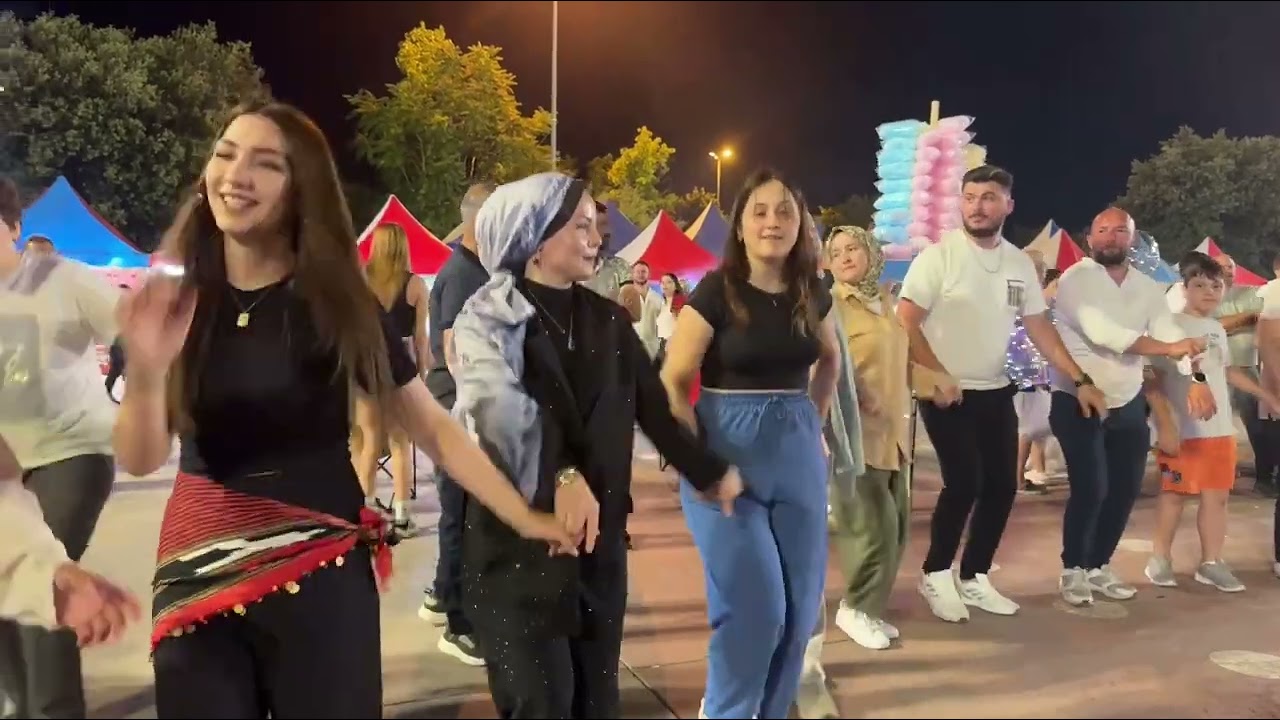
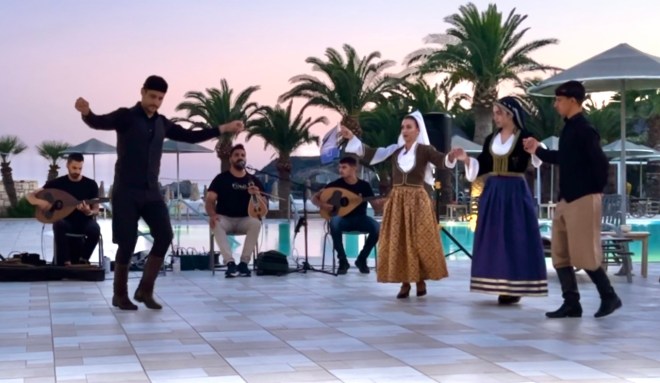
Beyond the costumes, music is central to the atmosphere of the Corfu Folklore Festival. The blend of Greek folk styles with echoes of Black Sea melodies creates an emotionally rich experience. The rhythmic beats encourage communal dancing, while the melodies spark nostalgia among those who recognize familiar tunes.
These performances highlight the universal nature of dance and song. While lyrics and steps may differ, the underlying emotions—joy, pride, longing—are easily understood across cultures. This shared experience becomes a bridge, connecting people who might otherwise focus only on divisions of nationality or history.
Cultural Exchange as an Ongoing Process
The Corfu Folklore Festival is more than a snapshot of tradition; it is evidence that cultural exchange is never static. Influences from centuries ago continue to shape modern expressions. What began as military attire may reappear as festive costume. What once was a regional melody may evolve into a universal rhythm for celebration.
This ongoing process is essential to understanding the deeper meaning behind festivals like this one. They remind us that heritage is not about purity or isolation but about adaptation and interaction. Corfu’s example demonstrates how traditions can honor the past while staying relevant to the present.
Looking Ahead
As the Corfu Folklore Festival continues to grow, its role as a platform for cultural dialogue will only expand. Each performance tells a story of resilience, memory, and interconnectedness. The recent viral attention offers an opportunity to frame these stories not only as entertainment but also as lessons in shared humanity.
For Türkiye and Black Sea communities, the echoes of familiar traditions in Corfu are a reminder that culture knows no borders. For the people of Corfu, the recognition reinforces the value of preserving local identity within a global context. Together, they show that festivals are not merely about looking back but about creating new moments of unity.
Editorial Note
As someone who has witnessed similar cultural gatherings in Türkiye, it is remarkable to see how traditions can travel, adapt, and re-emerge in unexpected settings. The Corfu Folklore Festival is a living reminder that the Mediterranean and the Black Sea are bound together by more than geography—they share a history of exchange that continues to shape their present.