The French automotive brand Citroën has officially launched the updated version of its much-loved microcity vehicle, the Citroën Ami, in Türkiye. Known for its compact dimensions, quirky design, and ultra-practical urban driving capabilities, the Ami has built a loyal following among city dwellers looking for affordable and eco-friendly mobility solutions. While the latest version does not introduce revolutionary changes, the facelift brings enough stylistic and practical updates to keep the model fresh in a growing micro-mobility market.
Refreshed Exterior Design That Keeps the Ami’s Charm
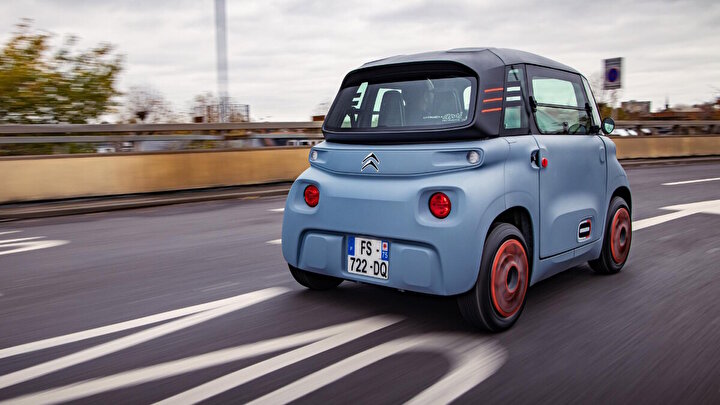
From the outside, the updated Citroën Ami stays true to its original character. The design remains unmistakably Ami, with its cube-like body, symmetrical panels, and distinctive LED lighting signature. However, a closer look reveals some subtle but meaningful upgrades.
The most noticeable change is the addition of Citroën’s new logo, which sits proudly on the front fascia, signaling the brand’s evolving identity. This small but significant update aligns the Ami with the latest Citroën models and gives the vehicle a more modern appearance. Another welcome addition is a set of new alloy wheel designs that provide a slightly sportier edge to the overall look, enhancing its urban personality.
The Ami’s dimensions remain unchanged, ensuring it retains its agility in tight city streets and its ability to squeeze into parking spots that larger cars cannot. This is a crucial selling point for Türkiye’s densely populated urban areas, where space is often limited.
Minimalist Interior That Stays True to Purpose
Stepping inside the updated Ami reveals a cabin that maintains the minimalistic, functional approach of its predecessor. Citroën has opted to keep the layout simple and practical, with hard-wearing materials and straightforward controls. The dashboard is basic, featuring storage compartments and phone holders rather than advanced infotainment systems, reflecting the Ami’s focus on short urban trips rather than long-distance comfort.
The seating arrangement remains two seats positioned side-by-side, maximizing interior space within the vehicle’s compact footprint. Visibility is excellent thanks to large windows, and the upright seating position gives a surprisingly commanding view of the road for such a small car.
Given the Ami’s primary role as an affordable, zero-emission commuter for crowded cities, the lack of luxury materials or complex tech features is intentional. It keeps costs down, reduces maintenance needs, and makes the Ami a no-nonsense tool for getting around town.
Powertrain and Performance Unchanged
Under the bodywork, the new Citroën Ami carries over the same electric motor setup from the previous generation. Power comes from a 6 kW electric motor that delivers a top speed of 45 km/h, making it suitable for short-distance urban travel. The range remains up to 75 kilometers on a full charge, which is more than adequate for daily city commutes, quick errands, or campus transportation.
Charging is straightforward, with the Ami able to plug into a standard household socket, eliminating the need for specialized charging stations. The battery can be fully charged in around three hours, meaning owners can easily recharge overnight or during work hours.
One key advantage for Türkiye’s drivers is that the Ami can be driven with a B1 license, making it accessible to a wider range of users, including younger drivers who may not yet qualify for a full driving license.

Pricing and Trim Levels in Türkiye
Citroën Türkiye has announced the pricing for the updated Ami as follows:
| Motor & Fuel | Trim & Transmission | Price (TRY) |
|---|---|---|
| 6 kW Electric | Ami, Automatic | 499,900 TL |
| 6 kW Electric | Ami Buggy, Automatic | 539,900 TL |
The Ami Buggy variant adds a more adventurous styling package, appealing to those who want their urban EV to stand out even more.
Why the Citroën Ami Appeals to Urban Drivers in Türkiye
The Ami’s appeal lies in its simplicity, affordability, and suitability for city life. Türkiye’s major cities like Istanbul, Ankara, and Izmir are notorious for heavy traffic and scarce parking spaces, making compact vehicles a practical choice. The Ami’s tiny footprint allows it to navigate congested roads easily and fit into parking spots that would be impossible for larger cars.
Its low running costs are another advantage. Being fully electric, the Ami eliminates fuel expenses and benefits from lower maintenance costs compared to petrol or diesel cars. For environmentally conscious drivers, the zero-emission nature of the Ami also aligns with growing interest in sustainable transportation.
Micro-Mobility Trends in Türkiye
The launch of the updated Ami comes at a time when micro-mobility is gaining significant traction in Türkiye. Urban populations are increasingly turning to compact EVs, e-scooters, and shared mobility services to avoid traffic congestion and reduce environmental impact. Municipalities are also supporting this shift by introducing low-emission zones and promoting alternative transport options.
In this context, the Ami sits in a unique position — offering more comfort and weather protection than a scooter, yet being far cheaper and easier to park than a conventional car. This makes it especially attractive to young professionals, students, and small business owners who need a cost-effective mobility solution for short trips.
Competitor Landscape
In the Turkish market, the Ami’s main competition comes from other micro-EVs such as the Renault Twizy and various Chinese-manufactured compact EVs entering the market. However, Citroën’s brand recognition, dealer network, and established customer base give it a distinct advantage.
While some competitors may offer slightly higher speeds or longer ranges, few can match the Ami’s combination of price, design charm, and ease of use. The Buggy variant further broadens its appeal by targeting lifestyle-oriented buyers who value style as much as practicality.
Practical Uses Beyond Personal Commuting
Although primarily marketed as a personal commuter, the Ami’s versatility extends to other roles. Small businesses in Türkiye could utilize it for quick urban deliveries, especially in sectors like food service, courier operations, and retail. Its low operating costs and ability to bypass certain traffic restrictions make it an efficient work vehicle for short-range logistics.
Tourism is another potential market. Coastal towns and resorts could offer the Ami as a rental vehicle for tourists who want to explore local attractions without contributing to traffic congestion or pollution.
Environmental and Economic Impact
On an environmental level, the Ami contributes to Türkiye’s broader push toward electrification and reduced urban emissions. While its individual carbon footprint savings may be modest due to its limited range, the cumulative effect of more city commuters switching from petrol-powered cars to compact EVs can be significant.
Economically, the Ami offers long-term savings for owners. Beyond the lower cost of electricity compared to fuel, the vehicle’s simple mechanical design means fewer parts that can fail, reducing maintenance expenses.
The Future of the Ami in Türkiye
As the electric vehicle market continues to grow in Türkiye, Citroën’s decision to refresh the Ami — rather than replace it entirely — suggests confidence in its existing formula. By keeping the core elements intact while updating the styling and reinforcing its urban-friendly credentials, Citroën ensures the Ami remains relevant in an increasingly competitive landscape.
Looking ahead, the Ami could benefit from future enhancements such as slightly increased range, additional personalization options, and integration with urban mobility apps for car-sharing or fleet management. However, even in its current form, it serves as a bridge between traditional cars and ultra-light mobility solutions.