
Türkiye’s automotive industry continued to display mixed performance in the first seven months of 2025, according to the latest figures released by the Automotive Manufacturers Association (OSD). The data reveal a steady overall production trend, strong growth in certain vehicle segments, and Türkiye’s continued dominance in automotive exports, despite some declines in specific categories.
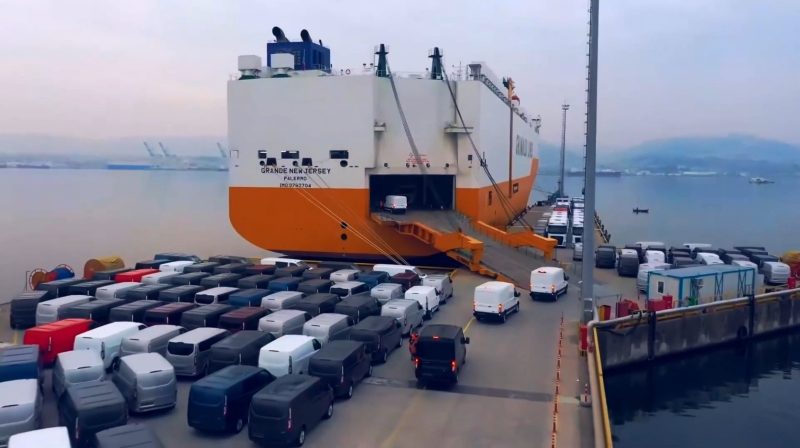
July Sees Strong Growth in Commercial Vehicle Output
In July 2025, total vehicle production rose 10 percent compared to the same month in 2024. Passenger car production increased by 1 percent, while commercial vehicle output surged 31 percent, marking one of the strongest monthly growth rates in recent years. However, tractor production fell sharply by 26 percent in the same period, highlighting ongoing challenges in the agricultural vehicle segment.
Production Performance in January–July 2025
Between January and July 2025, Türkiye’s total automotive production rose 1 percent year-on-year to 834,838 units. Passenger car production fell 4 percent to 521,447 units, but when tractor output is included, the overall total reached 853,376 units.
The breakdown of production performance shows clear contrasts:
Commercial vehicles – Up 11 percent overall
Light commercial vehicles – Up 14 percent
Heavy commercial vehicles – Down 9 percent
Tractors – Down significantly year-on-year
This data confirms that the sector’s current growth is being driven primarily by the light commercial segment, which benefits from strong domestic logistics demand and sustained export interest.
Capacity Utilization Rates Remain Stable
For the first seven months of 2025, the automotive industry’s average capacity utilization rate stood at 67 percent. Segment-specific rates were as follows:
Light vehicles (passenger + light commercial) – 69 percent
Trucks – 56 percent
Buses & midibuses – 64 percent
Tractors – 42 percent
While light vehicle production is operating at relatively healthy levels, the low utilization in trucks and tractors reflects market weakness in these areas.

Export Performance Strengthens Sector Leadership
Türkiye’s automotive industry maintained its position as the country’s leading export sector, accounting for 18 percent of total national exports in the first seven months of 2025, according to Turkish Exporters Assembly (TİM) data.
From January to July 2025:
Total automotive exports – 630,992 units, up 9 percent compared to the same period in 2024.
Passenger car exports – Down 5 percent.
Commercial vehicle exports – Up 34 percent.
Tractor exports – Down 32 percent to 6,490 units.
In terms of value, Uludağ Exporters Association figures show:
Total automotive exports – 23.5 billion USD, up year-on-year.
Passenger car exports – 6.9 billion USD, up 12 percent.
Main industry exports – Up 18 percent.
Supplier industry exports – Up 7 percent.
These numbers underline the automotive sector’s dual strength: high-value exports from core manufacturing and sustained contributions from the supply chain.
Domestic Market Demand Shows Moderate Growth
The domestic market also experienced moderate growth in the first seven months of 2025:
Total vehicle market – 739,903 units, up 6 percent year-on-year.
Passenger car sales – 572,198 units, up 7 percent.
Total commercial vehicle sales – Up 3 percent.
Light commercial vehicle sales – Up 6 percent.
Heavy commercial vehicle sales – Down 8 percent.
The data also reveal the market share of domestically produced vehicles:
Passenger cars – 30 percent local production share.
Light commercial vehicles – 20 percent local production share.
Analysis of Market Dynamics
The first seven months of 2025 highlight a split trend in Türkiye’s automotive sector. On one hand, the rise in light commercial vehicle production and exports is keeping overall figures stable and generating significant export revenue. On the other hand, the decline in passenger car and tractor production signals challenges linked to global market fluctuations, cost pressures, and shifting consumer preferences.
Global supply chain improvements and export demand from Europe have supported Türkiye’s automotive output, especially in commercial vehicles. However, the domestic market still faces price sensitivity, particularly in passenger cars, where high interest rates and rising costs have limited stronger growth.
The Road Ahead for Türkiye’s Automotive Industry
To maintain its global competitiveness, Türkiye’s automotive sector will need to focus on:
Expanding EV and hybrid production to align with global sustainability trends.
Strengthening its supply chain resilience against potential geopolitical or logistics disruptions.
Increasing domestic content in vehicle production to boost local market share.
Exploring new export markets beyond Europe to diversify risk.
Given the industry’s continued role as Türkiye’s top export sector, policy support, investment in technology, and close collaboration between manufacturers and suppliers will be critical in the second half of 2025.