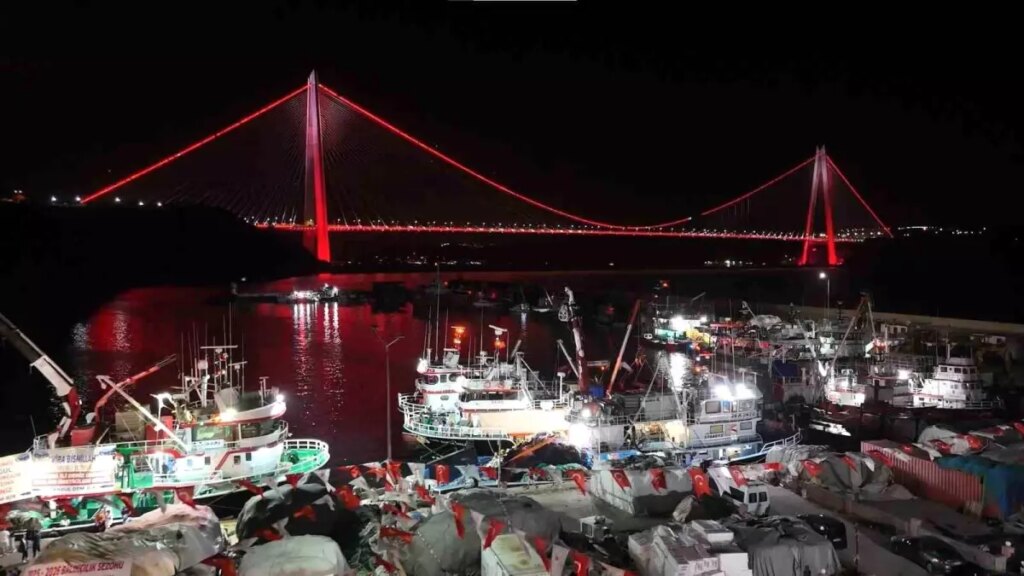

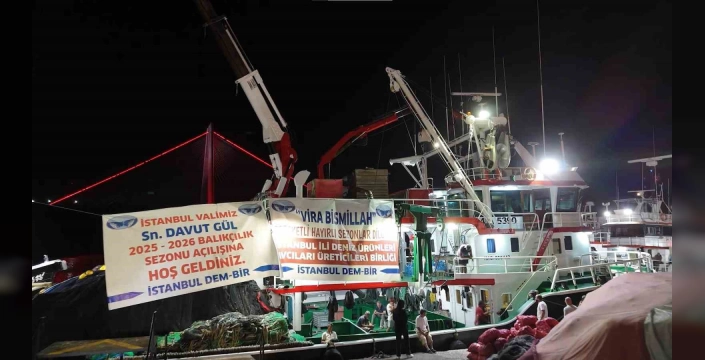
The 2025-2026 fishing season officially opened in Istanbul on September 1, marking the end of the summer ban that began on April 15. Fishermen across the city celebrated the occasion with the traditional call of “Vira Bismillah” as they cast their nets into the waters of the Bosphorus.
The opening ceremony took place at Beykoz Poyrazköy Fishermen’s Shelter and was attended by Istanbul Governor Davut Gül and Istanbul Provincial Director of Agriculture and Forestry Suat Parıldar. Highlighting Istanbul’s 661 kilometers of coastline and its unique position on migratory fish routes, officials underlined the city’s role as one of Türkiye’s leading hubs for the fishing industry.
With 2,001 registered fishing vessels and more than 18,000 licensed fishermen, Istanbul is not only a production center but also a vital distribution hub. The presence of Gürpınar Fish Market — the largest wholesale seafood market in Europe — combined with advanced logistics infrastructure further strengthens the city’s central role in fisheries trade.
Governor Gül’s Call for Sustainable Fishing
In his opening remarks, Governor Davut Gül drew attention to the long-term importance of sustainable practices in the sector. Using the metaphor of the “golden goose,” he warned that ignoring rules or bending them to favor specific groups would harm the very foundation of the industry.
“Sustainability is the golden rule,” he stated. “If we do not respect regulations, we risk cutting the goose that lays golden eggs. The issues are not unknown, and solutions will come through collaboration between parliament, the Ministry of Agriculture, professional chambers, and the fishermen themselves. As long as nature provides, we will continue to find solutions step by step. I wish this season to be prosperous for all of you, for Istanbul, and for our country.”
His remarks underscored the growing awareness that fisheries management is not simply about maximizing short-term yields but ensuring that future generations can continue to benefit from marine resources.
Tradition Meets Regulation
The phrase “Vira Bismillah” — a blessing uttered by Turkish fishermen at the start of the season — resonated across Istanbul’s waters as boats departed after midnight. The tradition represents both faith and optimism, marking the beginning of months of hard work at sea.
Yet alongside tradition, regulation plays a crucial role. Authorities confirmed that inspections continue on a 24/7 basis to ensure compliance with fishing bans, quotas, and gear restrictions. Since September 1, 2024, more than 14,269 inspections have been carried out across Istanbul.
Officials stressed that these measures are essential for protecting fish stocks, particularly migratory species such as anchovy, bonito, and bluefish, which are critical both for local consumption and export.
Support for Small-Scale and Women Fishermen
Another important focus of the opening was the recognition of small-scale producers and women working in fisheries. The Ministry of Agriculture continues to provide targeted support to these groups, acknowledging their contribution to both local economies and sustainable practices.
In 2025, a total of 12.69 million TL in financial support was distributed to 1,428 fishing vessels, highlighting the government’s effort to provide stability in a sector vulnerable to climate change, fluctuating stocks, and rising fuel costs.
Such support schemes are designed not only to maintain economic viability but also to encourage responsible fishing practices that balance livelihoods with conservation.
Istanbul as a Regional Powerhouse in Fisheries
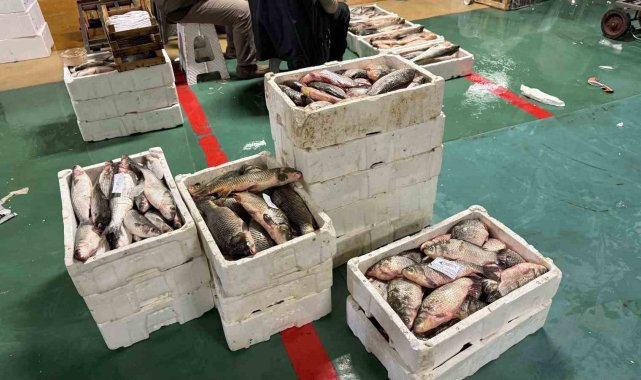
Istanbul’s geographic position makes it a unique player in the fisheries industry. The Bosphorus serves as a critical migration corridor for species moving between the Black Sea and the Sea of Marmara, providing seasonal abundance that sustains local fishing communities.
The city’s role extends beyond harvesting. Gürpınar Fish Market is the largest seafood market in Europe, handling thousands of tons of fish annually and serving as a distribution point to domestic and international markets. Combined with modern cold-chain logistics, Istanbul has positioned itself as both a national and regional leader in seafood trade.
Challenges and Opportunities Ahead
While the new season begins with enthusiasm, challenges remain. Overfishing, illegal practices, and climate change continue to threaten fish stocks. Rising sea temperatures and shifting ecosystems are already altering migration patterns, which could affect future yields.
At the same time, technological innovations and international cooperation present opportunities. Advances in satellite monitoring, digital traceability, and aquaculture are helping Türkiye modernize its approach to fisheries management. As Istanbul takes the lead, it has the potential to set a benchmark for sustainable practices across the country.
A Season of Hope
The opening of the 2025-2026 fishing season is more than an economic milestone; it is a cultural event that brings communities together around centuries-old traditions. From small family-owned boats to large industrial fleets, the collective cry of “Vira Bismillah” embodies resilience, optimism, and the enduring bond between Istanbul’s people and the sea.
As nets are cast and markets prepare for the influx of fresh seafood, the focus remains on balancing prosperity with sustainability. The coming months will test the industry’s ability to safeguard marine resources while ensuring livelihoods, but the shared commitment voiced at Poyrazköy suggests that Istanbul is determined to rise to the challenge.
Editor’s Note: The opening of the fishing season in Istanbul reflects not only an economic cycle but also the cultural and ecological significance of the sea. With sustainability at the forefront, this year’s season will serve as a measure of how tradition, regulation, and innovation can work together for the future of Türkiye’s fisheries.