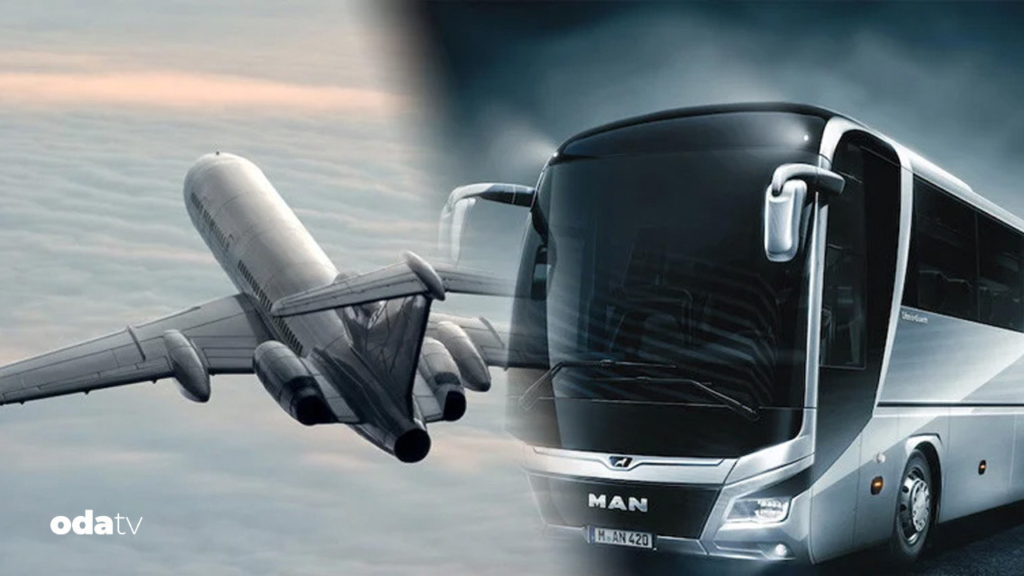

For decades, intercity buses were seen as the most affordable way to travel across Türkiye. They were not only a cheaper option compared to air travel but also offered a flexible network connecting almost every town and city. However, recent price comparisons reveal a striking reversal of this long-standing trend. Today, in many routes, flying has become less expensive than traveling by bus, a shift that is rapidly changing the habits of passengers.
According to data reported by Habertürk, many intercity bus tickets are now priced higher than flights offered by low-cost airlines. This has caused many travelers to reconsider their preferences, favoring air travel for long distances not only because of its affordability but also due to the time savings it provides.
Ticket Prices Turning the Tables
The price comparison between buses and planes paints a clear picture of this change. For example, on the popular Istanbul–Bodrum route, a bus ticket costs around 1,200 TL, while a plane ticket can be purchased for as low as 900 TL. Similarly, for the Istanbul–Konya route, the bus fare reaches 1,500 TL, whereas a plane ticket is approximately 810 TL.
Even on shorter trips like Istanbul–Ankara, buses still manage to stay competitive with 550 TL fares compared to 810 TL for a flight. Yet, on many longer-distance routes, the gap has widened, and buses no longer hold the price advantage that once made them the default option for budget-conscious travelers.
This reversal is surprising to many, as buses have historically been the choice of those seeking cost-effective travel. Today, passengers are beginning to calculate whether the convenience and affordability of flying outweigh the traditional benefits of long-distance bus travel.
Time Efficiency: Air Travel’s Strongest Advantage
One of the most decisive factors pushing travelers toward airplanes is the massive difference in travel time. Air travel saves not just hours but entire days compared to some long bus journeys.
Take the Istanbul–Antalya route as an example. A flight takes roughly one hour and 20 minutes, while the same trip by bus can last 13 to 14 hours. On routes like Istanbul–Diyarbakır or Istanbul–Van, the time difference becomes even more dramatic, with buses taking over 20 hours while flights cut that journey down to two.
For professionals, families with limited time, or those simply seeking comfort, the ability to cut travel time so drastically is a game-changer. Even if ticket prices were similar, the sheer efficiency of flying would make it an attractive option. Now, with flights sometimes even cheaper, the incentive is stronger than ever.
Baggage Allowances: A Key Factor Favoring Buses
Despite the cost and time advantages of planes, buses still hold one important advantage: luggage flexibility. Low-cost airlines in Türkiye typically include one small cabin bag and a checked-in luggage allowance of 15 kilograms. Anything beyond this incurs additional fees, which can make the trip more expensive.
By contrast, intercity bus companies usually allow passengers to bring up to 30 kilograms of luggage without any extra charge. This policy makes buses attractive for students traveling with many belongings, families carrying large amounts of luggage, or passengers relocating between cities.
For those whose travel is less about speed and more about transporting items affordably, buses remain the preferred choice.
Why Have Bus Prices Increased?
Experts point to several reasons behind the rising cost of bus tickets in Türkiye:
Fuel Prices – Rising global energy costs have significantly increased operational expenses for bus companies.
Highway and Bridge Tolls – Long-distance buses often pass through multiple tolls and bridges, adding to the overall ticket price.
Maintenance and Staff Costs – Running large fleets with professional drivers and attendants requires significant overhead.
Lower Passenger Demand – With more people choosing to fly, buses may have fewer passengers per trip, forcing companies to raise ticket prices to remain profitable.
Meanwhile, airlines, especially low-cost carriers, have become more competitive by offering promotions, online booking discounts, and dynamic pricing strategies. This has allowed them to attract passengers who would traditionally choose buses.
Shifting Habits of Travelers
The shift in pricing is reshaping how people think about intercity travel. Younger generations, especially students and professionals, are increasingly choosing flights for long-distance travel. Online booking platforms and mobile apps make finding cheap flights easier than ever, while airlines’ frequent promotions encourage travelers to plan ahead.
On the other hand, buses still maintain loyalty among certain demographics. Older passengers, people living in smaller towns without airports, and those carrying excess baggage still prefer buses despite the longer travel times. Overnight bus trips also continue to be popular for travelers who want to save on hotel costs and arrive at their destination early in the morning.
Environmental Considerations
An important angle in this debate is sustainability. Buses are generally considered more environmentally friendly than planes due to their lower carbon emissions per passenger on short to medium-distance routes. As Türkiye and the world focus more on climate change and reducing emissions, the growing preference for flights may present a challenge.
However, efficiency and pricing continue to dominate traveler choices. Until there are significant changes in environmental policies, most passengers will prioritize convenience and affordability over ecological considerations.
The Future of Intercity Travel in Türkiye
The current shift does not mean buses will lose relevance entirely. Instead, it may force bus companies to reinvent their services. Some companies are already experimenting with luxury buses offering more legroom, personal screens, Wi-Fi, and onboard catering to compete not on price but on comfort and service quality.
Additionally, regional routes where flights are less practical—such as medium distances of 200–400 kilometers—may remain the stronghold of buses. Trips like Ankara–Eskişehir or Izmir–Bursa are too short for flying to be practical and too long for driving to be comfortable, making buses the natural choice.
Looking ahead, hybrid travel models may also become more common, where passengers combine flights and buses to optimize cost and convenience. For instance, one might fly into a major hub like Istanbul or Ankara and then take a bus to reach a smaller town.
A Transforming Market
Türkiye’s transportation market is clearly in a period of transformation. Air travel is no longer a luxury but a mainstream option competing directly with buses. For many passengers, the question is no longer whether they can afford to fly but whether they can afford not to.
As airlines continue to expand their domestic networks and bus companies adjust their strategies, the competition between these two modes of transport will intensify. What remains certain is that passengers stand at the center of this evolution, benefiting from more options and competitive pricing.
The once clear distinction between buses as the affordable option and planes as the expensive one has dissolved. In today’s Türkiye, flying may not only save time but also money, reshaping the very fabric of intercity travel.