

Türkiye, the undisputed leader in the global hazelnut industry, producing about 70% of the world’s supply, is facing one of its most challenging harvest seasons in decades. Following a record 717,000 tons of production last year and $2.6 billion in exports, the country’s 2025/2026 crop has been severely damaged by a combination of late-spring frosts and extreme summer heat.
Industry experts estimate production losses approaching 40%, a shortfall that could send hazelnut prices soaring — potentially doubling in both domestic and international markets. The Toprak Mahsulleri Ofisi (TMO – Turkish Grain Board) has set its official purchase price for in-shell hazelnuts between 190 and 200 TL per kilogram. However, many producers warn that market prices could reach as high as 400 TL/kg in the coming months.
A Sharp Decline in Harvest Expectations
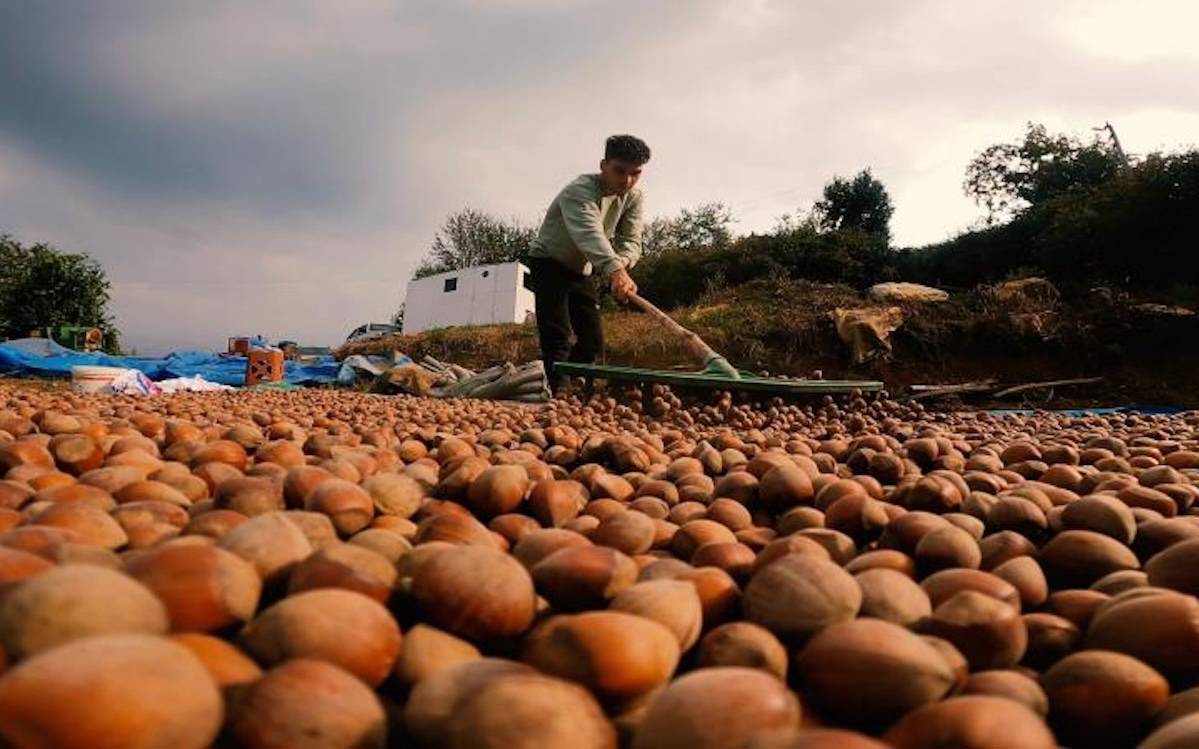
TMO recently announced that the 2025 harvest is expected to fall by 37% compared to last year, reaching approximately 453,000 tons. TMO General Manager Ahmet Güldal stressed that this estimate was compiled with input from provincial agriculture directorates, local chambers of agriculture, research institutes, and university experts. “Looking at the course of the harvest, it’s possible to say this figure is optimistic,” he said in remarks to Anadolu Agency.
Germany Tops Import List
Germany remains Türkiye’s largest hazelnut customer, accounting for 27.3% of total exports in 2024 with 88,260 tons shipped. Italy and Poland follow as the second and third largest importers, respectively. Last year, Türkiye’s total hazelnut exports surpassed $2.5 billion, but this year’s reduced output is expected to push prices up worldwide, especially in European markets.
Producers Warn of Massive Shortfalls
Özer Akbaşlı, owner of Akbaş Hazelnut Farm and former head of the Giresun Chamber of Agriculture, says this year’s yield projections vary widely. The Ministry of Agriculture has forecast 449,000 tons, while the Hazelnut Exporters’ Union projects 601,000 tons. Averaging these figures suggests a crop of about 500,000 tons — roughly 250,000 tons below a normal year’s output.
Akbaşlı emphasizes that farmers must be protected from severe income losses in such a difficult season. “This year’s frosts in April and May hit hazelnut orchards across 26 provinces, particularly in the Black Sea region, and July’s extreme heat caused sunburn damage on the nuts. With such losses, prices will inevitably rise, especially in our main export markets like Germany,” he said.
Discontent Over Official Purchase Prices
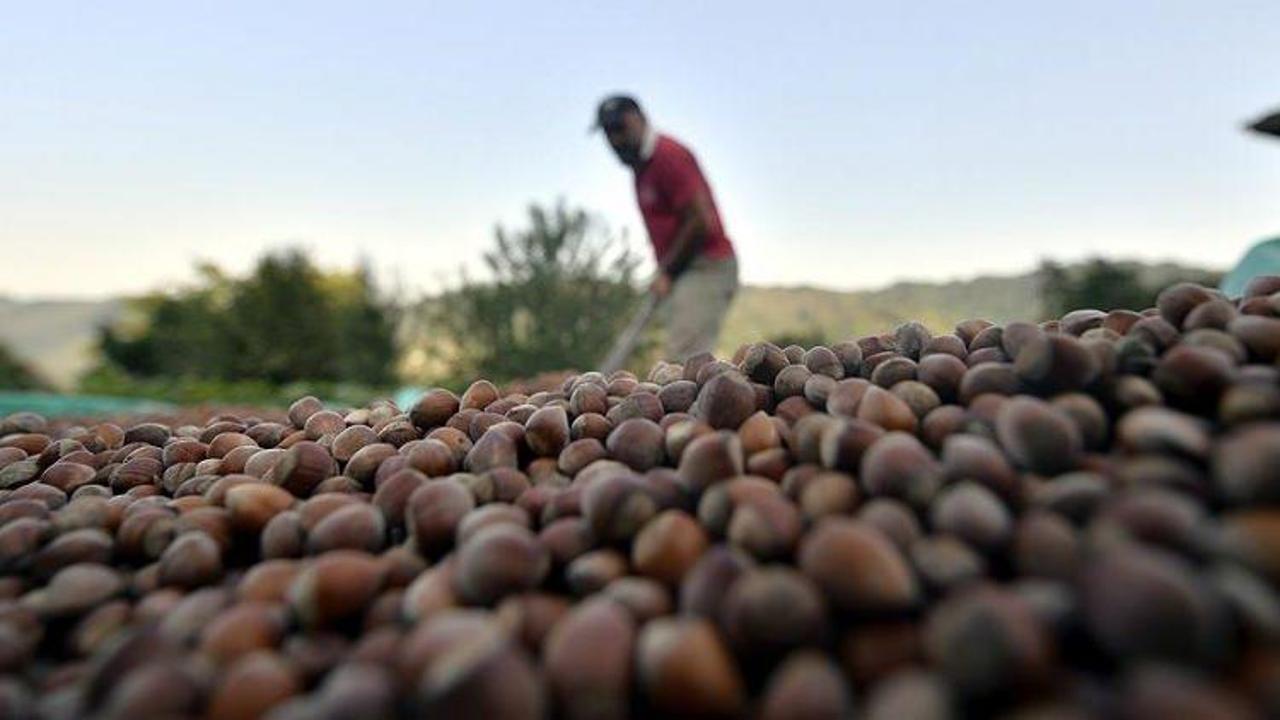
Many farmers have criticized TMO’s announced prices as insufficient. According to Akbaşlı, growers in both eastern and western Black Sea regions had hoped for 250 TL/kg. “More important than the price itself is flexibility in purchasing policies,” he warned, noting that overly strict grading could drive sales into the free market, where traders might offer 170–180 TL/kg.
Damage Assessment Still Underway
Cem Şenocak, President of the National Hazelnut Council, cautions that it’s too early to predict the final damage figures or the resulting price shifts. “Ordu alone, the world’s largest hazelnut-growing province by planted area, has suffered major losses. But we will only know the full extent once the nuts are in the sacks,” he explained.
Şenocak expects market prices to start above TMO’s levels and continue rising, with trends for the 2026 crop becoming clearer by next February or March, depending on weather conditions.
Calls for Higher Support Prices
Ali Bülent Erdem, President of the Farmers’ Union (Çiftçi-Sen), argues that official crop estimates may be intentionally inflated to justify lower purchase prices. He points out that the average cost of producing hazelnuts has risen to around 180 TL/kg due to climate-related damage, fungal diseases, and pests such as the brown marmorated stink bug. Adding a fair profit and a living wage margin, Erdem insists the minimum purchase price should be 280 TL/kg to keep farmers afloat.
Global Hazelnut Market Braces for Impact
Hamza Bölük, head of the Giresun Chamber of Commerce, compares the current situation to the recent cocoa shortage that sent prices to historic highs. He estimates this year’s hazelnut crop loss at around 40% and notes that two years ago in-shell hazelnuts sold for $3/kg internationally, while this year’s price has already reached $5/kg.
“With inflation driving up production costs in Türkiye, we naturally seek higher returns for our crop,” Bölük said. “Where prices will end up is anyone’s guess, but farmer expectations are as high as 400 TL/kg this year. That means export prices will climb sharply as well.”
Market Outlook: Rising Prices and Supply Pressure
Analysts expect tight supply to drive aggressive price competition among major buyers in Europe and Asia. For chocolate and confectionery manufacturers dependent on Türkiye’s hazelnuts, the price surge may prompt reformulations, product price hikes, or longer-term sourcing diversification.
The combination of climate volatility, high input costs, and fragile supply chains underscores the vulnerability of global agricultural commodities to environmental and economic shocks. For Türkiye’s farmers, the coming months will determine not only their income for the year but also their ability to invest in next season’s crop.
As the 2025 harvest progresses, the hazelnut industry — from smallholder farmers in the Black Sea to multinational chocolate brands — will be closely watching both the yields coming into warehouses and the prices emerging on trading floors. One thing is certain: in the coming season, every kilogram of Türkiye’s “green gold” will carry a premium price.