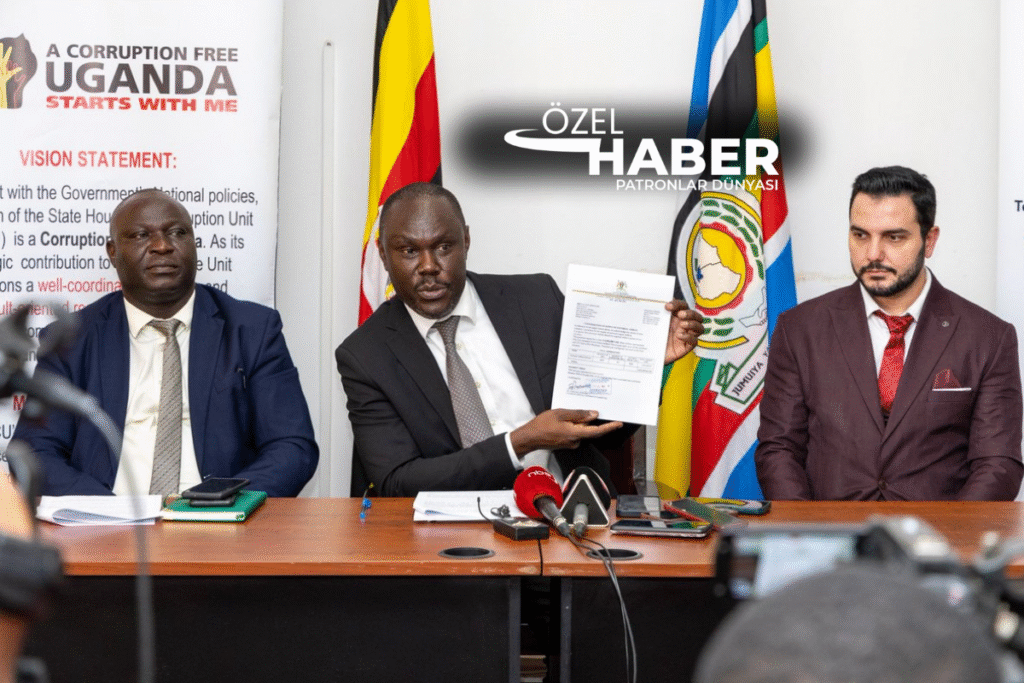

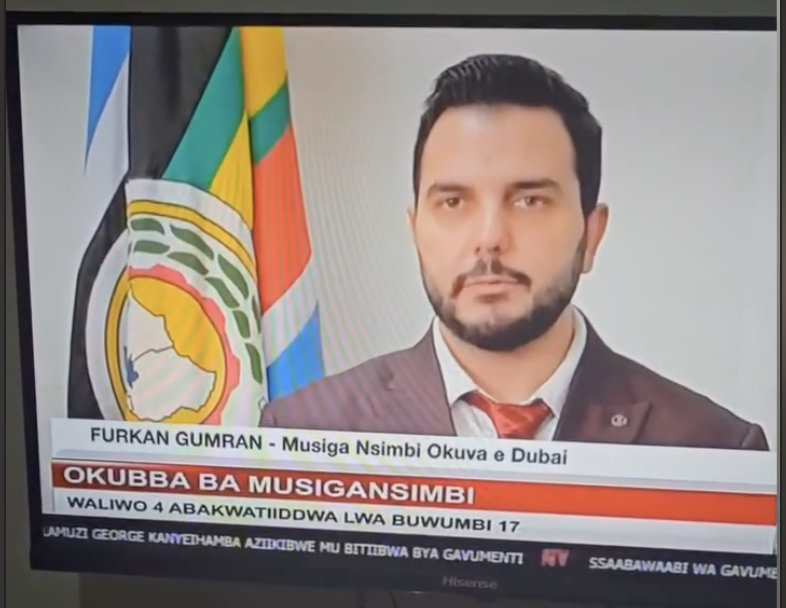
A major investment fraud attempt targeting Turkish entrepreneur Furkan Gümran, owner of Sirus Blue Chemical Manufacturing Co. Ltd., has been foiled by Ugandan authorities. The suspects had created a sophisticated operation involving fake government contracts, counterfeit websites, and forged logos in an effort to scam nearly 5 million US dollars from the investor.
The State House Anti-Corruption Unit (SHACU) confirmed that the suspects were caught in the act in Kampala, during what was planned as a staged fund transfer meeting.
$4.95 Million Fake Contract Disguised as Government Tender
The perpetrators presented a fraudulent contract under the name of Uganda’s Ministry of Energy and Mineral Development, claiming it was an official tender agreement for the supply of AdBlue (diesel exhaust fluid). The contract, valued at 18 billion Ugandan Shillings (approximately $4.95 million USD), was presented as a legitimate government procurement deal.
To gain the businessman’s trust, the scammers posed as members of a fabricated “Contract Committee” and used professional-looking documents, cloned websites, and forged ministry seals.
Arrest Made During Attempted Payment
The scheme unraveled when Furkan Gümran became suspicious of the inconsistencies in documentation and procedures. He alerted SHACU, whose investigators organized a sting operation. The suspects were arrested at AHA Towers in Kampala just as they were about to receive the funds.
The authorities seized laptops, documents, forged IDs, and other digital tools believed to have been used in similar scams. SHACU has opened a broader investigation into the network behind the operation.
Turkish Companies Among Frequent Targets
The scam is not an isolated incident. SHACU stated that the same criminal network has previously targeted companies from Türkiye, the United States, South Africa, and Kenya, often through elaborate impersonations of government officials.
In one earlier case, Turkish firm Guner Kuzu Construction was reportedly misled into a fake public hospital project, resulting in a financial loss of approximately $3.8 million USD.
These cases follow a consistent pattern: promises of large government contracts, convincing documentation, and staged interactions with individuals posing as senior officials.
Legal and Banking Professionals Implicated
Preliminary findings suggest the existence of a multi-layered fraud structure, with possible involvement from local attorneys, bank employees, and even government insiders.
SHACU officials have warned that the group may have had assistance from professionals who knowingly or unknowingly enabled the scheme — from validating fake contracts to processing financial transactions.
Authorities have not ruled out future arrests, and they are continuing to trace digital communications and financial trails linked to the suspects.
SHACU Issues Warning to International Investors
In response to the incident, SHACU released a public advisory urging foreign investors to independently verify any communications or demands allegedly made by Ugandan officials.
“Do not rely solely on email addresses or stamped documents,” the agency stated. “If in doubt, investors should contact SHACU directly or consult official government directories to verify legitimacy.”
The agency also encouraged embassies, trade missions, and private-sector representatives to increase their awareness of such schemes, especially in sectors involving construction, medical procurement, and energy supply.
Furkan Gümran Praised for Swift Action
Ugandan officials praised Furkan Gümran for his vigilance and prompt cooperation, which prevented a significant financial loss. His actions also helped authorities expose a larger web of organized financial crime operating within and beyond Uganda’s borders.
Sirus Blue Chemical, known for its operations in sustainable industrial solutions, is expected to continue its planned investment exploration in Africa, albeit with increased due diligence and security protocols.
Conclusion Without a Label
This incident underscores the growing sophistication of transnational investment fraud schemes, where criminal groups exploit global business interests through deception and forged legitimacy. As emerging markets become more accessible to foreign investors, so too do the risks associated with fraudulent activities.
Authorities urge all companies — regardless of size — to conduct thorough background checks, involve legal advisors in early stages of negotiations, and report any suspicious activity to relevant anti-corruption units.
In the digital age, trust must be earned not just through presentation, but through verified accountability.