
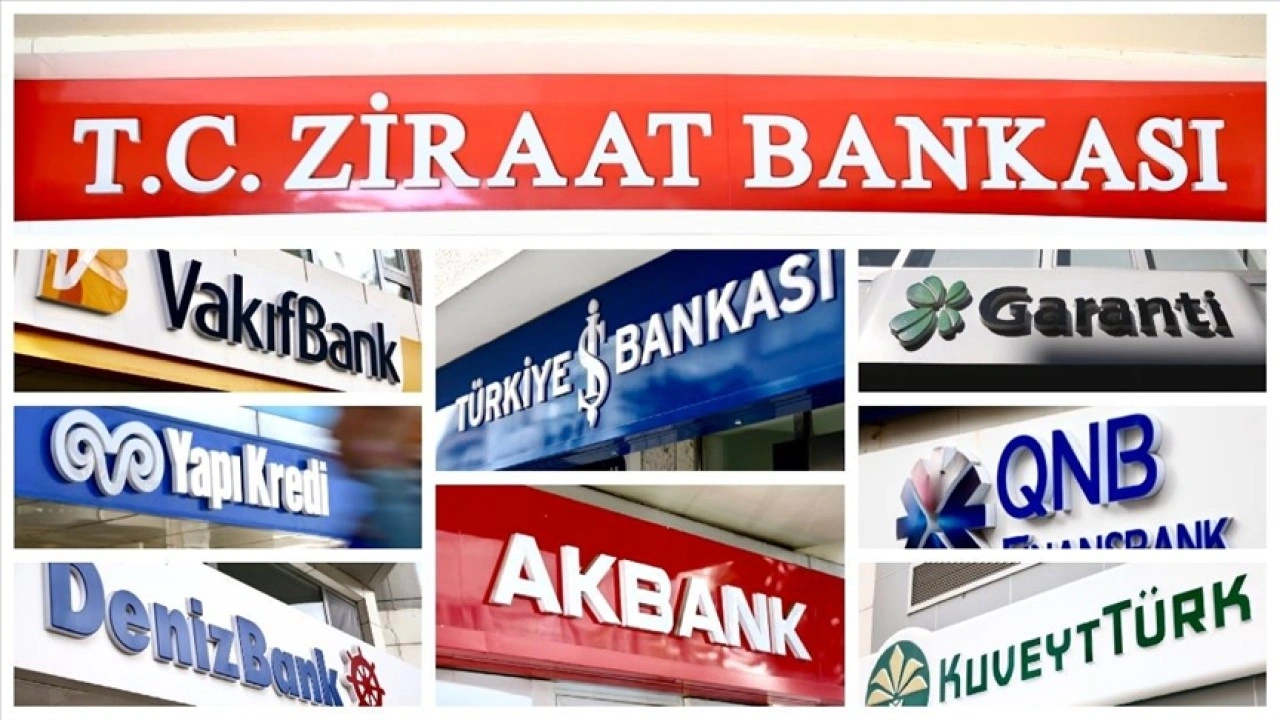
The first half of 2025 has marked a period of impressive expansion for Türkiye’s largest banks, showcasing notable increases in total assets, net profits, deposits, and credit volume. Data compiled from the non-consolidated financial statements of leading institutions underscores the strength and resilience of the country’s banking sector. In an economic environment shaped by tighter monetary policy and changing investor behavior, these financial giants have delivered robust performance and reinforced their market leadership.
Asset Growth Surges Past 40 Percent Across the Top 10 Banks
As of the end of June 2025, the combined total assets of Türkiye’s ten largest banks soared to 32.5 trillion lira, marking a 40 percent increase from 23.2 trillion lira during the same period in 2024. This acceleration in asset growth reflects strong balance sheet expansion across both state-owned and private banks, signaling increased financial intermediation in the economy.
Ziraat Bankası led the asset rankings with 6.9 trillion lira, maintaining its position as the largest bank in terms of assets. VakıfBank followed closely with nearly 4.6 trillion lira. Türkiye İş Bankası ranked third with 3.97 trillion lira and also held the title of the largest private-sector bank by assets. Halkbank came in fourth at 3.65 trillion lira, and Garanti BBVA closed out the top five with 3.2 trillion lira in total assets.
The remaining banks in the top 10 asset list included Akbank (2.81 trillion lira), Yapı Kredi (2.8 trillion lira), QNB Bank (1.8 trillion lira), DenizBank (1.6 trillion lira), and Kuveyt Türk (1 trillion lira), which continued to be the only participation bank among the largest financial institutions.
Ziraat Bankası Leads in Profitability With 108 Percent Growth
Profitability across the sector remained strong, with the top 10 banks recording a combined net income of 304.99 billion lira for the January-June period—up 32 percent year-on-year. Ziraat Bankası again topped the list, reporting 64 billion lira in net profit, more than doubling its earnings from the previous year with a growth rate of 108.9 percent.
Garanti BBVA came second with 53.6 billion lira, followed by VakıfBank (30.1 billion lira), Türkiye İş Bankası (29.8 billion lira), and DenizBank (27.1 billion lira). Other major contributors included Akbank (24.9 billion lira), Yapı Kredi (22.7 billion lira), QNB Bank (21.9 billion lira), Kuveyt Türk (18.9 billion lira), and Halkbank (12 billion lira).
Profit growth remained broad-based. Alongside Ziraat Bankası, other strong performers included VakıfBank (56.6 percent increase), Halkbank (45.7 percent), Yapı Kredi (30.7 percent), and QNB Bank (25.6 percent).
Deposit Volume Hits 21.2 Trillion Lira With Major Shifts in Market Share
Deposits, the primary source of funding for banks, rose to 21.2 trillion lira across the sector. Among the top 10 banks, total deposit volume increased by 36 percent compared to the same period last year, reflecting growing confidence in Turkish lira assets and successful deposit mobilization campaigns.
Ziraat Bankası once again took the lead, managing 4.5 trillion lira in deposits. Halkbank followed with 3 trillion lira, while VakıfBank reported 2.9 trillion lira. Türkiye İş Bankası held 2.6 trillion lira, and Garanti BBVA 2.2 trillion lira.
Notably, Türkiye İş Bankası achieved the highest deposit growth rate at 42.3 percent, followed by Ziraat Bankası (39 percent), Garanti BBVA (38.4 percent), and Halkbank (37.5 percent). Even participation bank Kuveyt Türk showed notable expansion, increasing its funds by 34.2 percent to reach 688.1 billion lira.
Credit Expansion Surpasses 17 Trillion Lira
Loan disbursement also saw substantial growth. The total volume of cash loans issued by the top 10 banks surpassed 17.1 trillion lira in the first half of 2025. Ziraat Bankası provided the largest share of credit with 3.6 trillion lira in outstanding loans, underscoring its leadership in public sector financing and agricultural lending.
VakıfBank issued 2.5 trillion lira in loans, followed by Türkiye İş Bankası with 2 trillion lira. Garanti BBVA (1.9 trillion lira) and Halkbank (1.7 trillion lira) rounded out the top five.
Loan book growth was especially pronounced at Ziraat Bankası (up 52.6 percent), QNB Bank (47.3 percent), and Garanti BBVA (44.8 percent), reflecting a combination of increased lending appetite and supportive macroeconomic conditions.
Equity Bases Expand by 51 Percent Sector-Wide
Shareholder equity among the top banks also witnessed substantial growth. The combined equity of the top 10 banks reached 2.6 trillion lira, up from 1.7 trillion lira a year ago—an increase of 51 percent. This expansion highlights improved capital adequacy and balance sheet strength in line with regulatory standards.
Ziraat Bankası retained its dominance with 575.9 billion lira in equity, followed by Garanti BBVA (377.6 billion lira), Türkiye İş Bankası (360.5 billion lira), and Akbank (258.9 billion lira).
Kuveyt Türk led the way in equity growth, increasing its base by 70.3 percent. Other notable increases came from Ziraat Bankası (51.2 percent), DenizBank (45.9 percent), QNB Bank (40.9 percent), and Garanti BBVA (35.2 percent).
Kuveyt Türk Stands Out Among Participation Banks
Among participation banks, Kuveyt Türk continued to demonstrate robust performance. With 1 trillion lira in total assets, it remained the only Islamic finance institution in the top 10. The bank collected 688.1 billion lira in participation funds and posted a net profit of 18.9 billion lira—up 22.1 percent from the previous year.
Its equity growth rate of 70.3 percent and steady rise in loan volume further underscored its role as a key player in Türkiye’s diversified banking landscape.
A Competitive Landscape Defined by Specialization
The rankings reveal a competitive balance between state-owned and private banks. Public institutions like Ziraat Bankası, VakıfBank, and Halkbank dominate in asset size and credit disbursement, reflecting their mandate in economic development and public lending.
Meanwhile, private sector banks such as Garanti BBVA, Türkiye İş Bankası, and Yapı Kredi show strength in profitability, equity management, and digital innovation. This dual-track structure offers resilience to Türkiye’s financial system, balancing growth with risk mitigation.
As 2025 progresses, all eyes will remain on how these banks navigate evolving monetary conditions and global uncertainties while maintaining their trajectory of expansion and profitability.