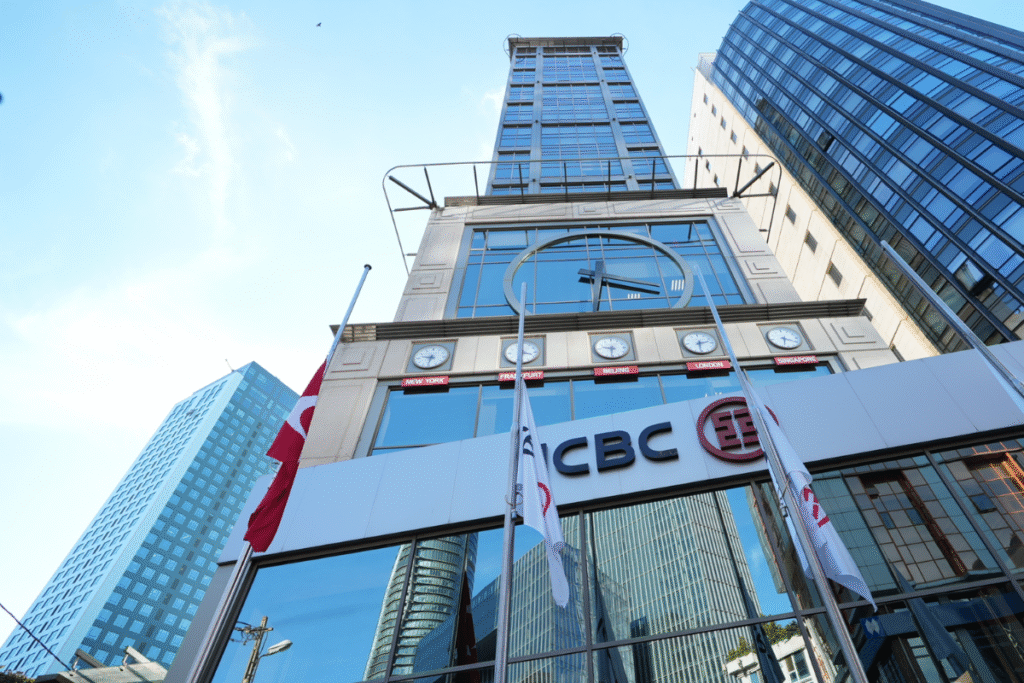

The Industrial and Commercial Bank of China (ICBC), the world’s largest bank by assets, is set to implement a major restructuring of its Türkiye operations. The move will significantly reduce the number of its physical branches in the country, signaling a broader shift in strategy amid evolving global financial dynamics and regional market conditions.
According to an official statement released by the bank, ICBC will shut down five branches and merge another seven into existing locations, effectively reducing its current network from 31 branches to 19. The decision comes as part of the bank’s efforts to streamline operations, optimize resource allocation, and align with the digital transformation trends in global banking.
From Entry to Restructuring: ICBC’s Journey in Türkiye
ICBC entered the Turkish financial landscape in 2014, marking its presence through the acquisition of Tekstilbank. This strategic entry allowed ICBC to establish a foothold in Türkiye, a country viewed as a critical gateway between Asia and Europe.
Since then, the bank has focused heavily on corporate banking, providing financing for large-scale projects and facilitating cross-border transactions between Turkish and Chinese businesses. Over the past decade, ICBC has served as a financial bridge for trade, infrastructure, and investment initiatives linked to China’s Belt and Road vision.
However, the recent move indicates a pivot in operational focus. The decision to scale down its physical footprint suggests that the bank may now be emphasizing digital services, centralized operations, and higher efficiency.
Reasons Behind the Restructuring
Several factors appear to have influenced ICBC’s decision to downsize its branch network in Türkiye:
Shift Toward Digital Banking: Like many global financial institutions, ICBC is transitioning away from branch-heavy models. The COVID-19 pandemic accelerated the adoption of mobile and online banking, reducing the need for physical locations.
Cost Optimization: Maintaining underutilized branches can strain profitability, especially in competitive banking markets. Consolidating operations helps cut real estate, staffing, and operational costs.
Refined Market Strategy: ICBC may be narrowing its focus to larger corporate clients and high-value commercial banking services, areas where physical presence is less critical compared to retail banking.
Regulatory and Economic Factors: The Turkish banking sector has experienced significant fluctuations in recent years due to currency volatility, inflation, and monetary policy shifts. Global institutions are cautiously adapting to these variables.
Global Trend Reflected in Türkiye
ICBC’s announcement mirrors a broader global trend among major financial institutions. Banks across Europe, Asia, and the Americas have been reducing their branch networks while enhancing digital platforms. Türkiye is no exception, as many local banks have already adopted branch rationalization strategies in favor of online-first approaches.
This transformation is not necessarily a sign of retreat. Instead, it represents a recalibration of operations to meet the evolving demands of customers and markets. ICBC’s continued presence in Türkiye — albeit with fewer physical branches — suggests a sustained long-term interest in the region.
Impacts on Clients and Employees
While the restructuring may raise concerns among customers and employees, ICBC has not publicly announced layoffs or service disruptions. Clients of the affected branches will likely be redirected to nearby consolidated locations or encouraged to use online channels.
For corporate clients — the bank’s primary focus in Türkiye — little is expected to change. Most commercial banking transactions are already conducted through centralized portals and relationship managers rather than physical visits.
Employees, on the other hand, may face role reassignments or relocation. However, given the gradual nature of the transition and the limited number of closures, ICBC may manage the process with internal redeployments.
Türkiye’s Evolving Banking Landscape
The banking sector in Türkiye is undergoing rapid modernization. With increasing internet penetration, fintech startups, and changing customer expectations, traditional banking models are being challenged. Digital wallets, mobile banking apps, and AI-powered financial tools are becoming mainstream.
Foreign banks operating in Türkiye are adjusting accordingly. Some are investing in local fintech partnerships, while others are focusing on specialized sectors like investment banking or corporate lending. ICBC’s restructuring fits within this pattern — a global bank adapting to a tech-driven financial environment without withdrawing from the market entirely.
Outlook for ICBC and Its Role in Türkiye–China Relations
Despite the operational scale-down, ICBC remains a strategic actor in Türkiye–China relations. As infrastructure projects, energy deals, and bilateral trade between the two countries grow, ICBC’s role as a financial facilitator becomes increasingly vital.
The bank has already been involved in financing major infrastructure ventures in Türkiye, including energy, transportation, and logistics projects. With Türkiye’s interest in attracting foreign capital and China’s push to extend its global economic influence, ICBC will likely continue to be a key player in large-scale funding mechanisms.
What This Means for the Broader Market
ICBC’s decision may influence how other foreign banks operating in Türkiye evaluate their operations. While some may see consolidation as a warning signal, others might interpret it as a strategic alignment with modern banking practices.
Analysts believe that Türkiye will remain an attractive market for financial institutions with specialized service models, strong digital infrastructure, and agile operational strategies. For ICBC, the focus now seems to be on quality over quantity — enhancing service delivery while reducing operational drag.
Adapting to a New Era of Global Banking
As financial institutions across the world undergo digital transformation, the number of physical branches is becoming less indicative of a bank’s market presence or influence. What matters more today is digital reach, financial innovation, and adaptability.
ICBC’s operational shift in Türkiye reflects a broader strategic vision: one that aligns with global trends while maintaining a firm foothold in a dynamic and high-potential region. It is a calculated move to remain competitive, efficient, and relevant in a rapidly evolving financial landscape.