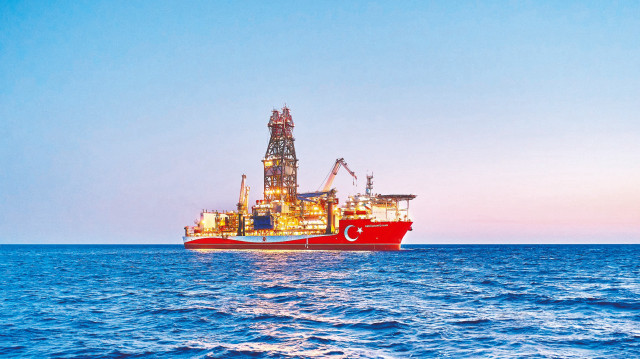

On August 21, 2020, Türkiye marked a turning point in its energy history when President Recep Tayyip Erdoğan announced the country’s largest-ever natural gas discovery in the Black Sea. At the time, the announcement carried both symbolic and practical importance. Symbolically, it underscored Türkiye’s determination to secure energy independence, while practically, it promised a major reduction in the country’s heavy reliance on energy imports.
In his statement, Erdoğan declared that the Fatih drilling vessel, operating at the Tuna-1 well, had discovered 320 billion cubic meters (bcm) of natural gas. This was the beginning of a new chapter for Türkiye’s energy sector—one that has since expanded with further discoveries, ambitious infrastructure projects, and ongoing production.
Today, five years after that historic announcement, the discovery has grown into a large-scale project that is already fueling households and shaping Türkiye’s long-term energy strategy.
From Initial Discovery to Expanding Reserves
The Tuna-1 discovery in July 2020 was only the beginning. On October 17, 2020, an additional 85 bcm was identified in the same field, increasing the total reserves to 405 bcm. This was followed by the Amasra-1 well discovery in June 2021, which added another 135 bcm.
By the end of December 2022, the Çaycuma-1 well contributed 58 bcm to the reserves. Most recently, the Göktepe-3 discovery added another 75 bcm, bringing Türkiye’s total confirmed reserves in the Black Sea to an impressive 785 bcm.
These discoveries not only strengthened the country’s energy outlook but also placed Türkiye among nations with significant offshore gas reserves, drawing international attention to its evolving energy strategy.
Building the Infrastructure: Sakarya Gas Field
The discoveries led to the rapid development of the Sakarya Gas Field, located approximately 170 kilometers off the coast of Zonguldak at a depth of 2,200 meters. Massive infrastructure projects were undertaken to bring this gas to shore.
A 170-kilometer subsea pipeline, with a diameter of 16 inches, was built to transport the gas from the offshore wells to the processing facilities on land. On April 20, 2023, Türkiye achieved a historic milestone when the first locally extracted natural gas reached the shore.
Currently, gas is being produced from 12 wells, with a daily output of 9.5 million cubic meters under Phase 1 operations. In just two years, the Sakarya Gas Field has produced nearly 4 bcm of natural gas, providing concrete evidence of Türkiye’s determination to turn discovery into production.
Supplying Millions of Households
The impact of the Black Sea gas is already being felt in everyday life. As of today, approximately 4 million households across Türkiye are using natural gas produced from the Sakarya field. This marks the beginning of Türkiye’s journey toward energy self-reliance.
Looking ahead, the government has set ambitious targets. By 2028, Türkiye aims to quadruple this number, supplying 16 million households with domestically produced gas. Achieving this would significantly reduce energy imports, strengthen energy security, and provide households with a more stable energy supply less affected by fluctuations in global markets.
Expanding the Energy Fleet
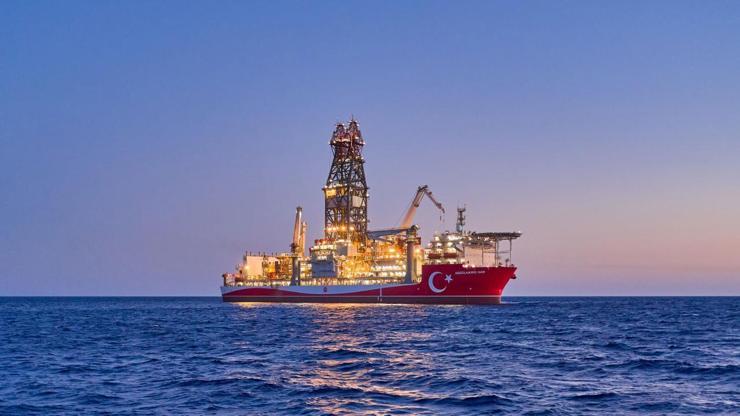
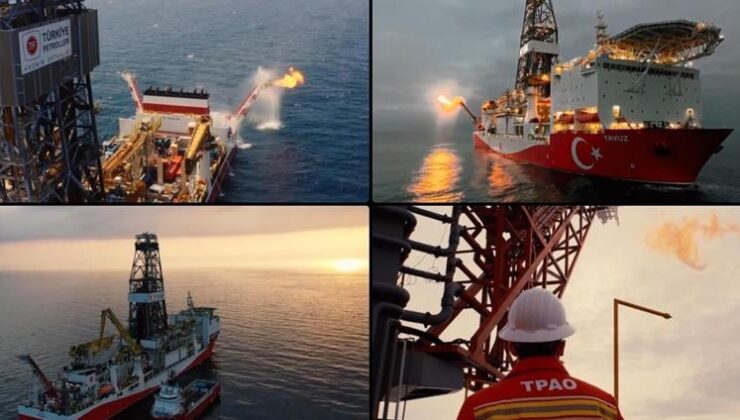
Türkiye’s success in offshore drilling is supported by one of the strongest drilling fleets in the region. The Fatih, Kanuni, Yavuz, and Abdülhamid Han vessels are already active in the Black Sea. Plans are in place to expand this fleet further, with the fifth and sixth drilling ships expected to join operations. One of these is scheduled to be deployed in the Black Sea by 2026, further strengthening Türkiye’s exploration and production capabilities.
This investment in national energy infrastructure ensures that Türkiye is not only reliant on its existing reserves but also actively pursuing new discoveries that could sustain production levels for decades to come.
Osman Gazi Floating Production Unit: The Next Big Step
Phase 2 of the Sakarya Gas Field development introduces a critical new element—the Osman Gazi Floating Production Unit (FPU). This facility will play a central role in processing and transporting gas, effectively doubling production capacity to 20 million cubic meters per day once operational.
The target for Phase 2 is 2028, aligning with Türkiye’s goal of supplying 16 million households with local gas. Beyond this, Phase 3 is already being planned, with a second floating production platform to be launched. Once completed, the Sakarya Gas Field’s production capacity is expected to reach 40 million cubic meters per day, securing its place as one of the most significant offshore gas fields in the region.
Economic and Strategic Significance
Türkiye is one of Europe’s largest energy importers, historically spending tens of billions of dollars annually on natural gas imports from countries such as Russia, Iran, and Azerbaijan. Reducing this dependency has long been a strategic priority.
The Black Sea discoveries are therefore not just an energy project but a geopolitical milestone. By producing domestic gas, Türkiye can reduce its energy bill, stabilize domestic energy prices, and negotiate more favorable terms with external suppliers.
In addition, the project supports local industries and employment. Thousands of engineers, technicians, and contractors are involved in construction, drilling, and pipeline operations. This contributes to Türkiye’s technological capabilities and strengthens its position as a regional energy hub.
The Global Context: Transition and Competition
The Black Sea gas discoveries also come at a time when the global energy sector is in transition. The push toward renewable energy and electrification is gaining momentum, but natural gas continues to be a critical bridge fuel. It is cleaner than coal and oil and provides essential stability for energy systems reliant on intermittent renewable sources like wind and solar.
By leveraging its domestic natural gas, Türkiye positions itself more competitively in this global transition. Domestically produced gas reduces vulnerability to external shocks, such as price spikes or supply disruptions, while supporting Türkiye’s broader commitment to diversifying its energy mix.
Challenges and Future Outlook
While the progress is significant, challenges remain. Offshore drilling is a costly and technologically demanding process. Maintaining production levels, managing environmental risks, and ensuring financial sustainability are ongoing concerns.
However, Türkiye has demonstrated resilience and determination in expanding its drilling fleet, investing in pipelines, and training local expertise. If the Sakarya Gas Field continues on its current trajectory, the 2028 goals appear achievable.
Beyond 2028, Phase 3 expansion and potential new discoveries could transform Türkiye into a country that not only meets its domestic demand but could eventually position itself as a regional exporter.
A National Milestone with Lasting Impact
Five years after the announcement of the first Black Sea discovery, Türkiye has moved beyond celebration into active production. With 785 bcm of confirmed reserves, a growing fleet of drilling vessels, and a clear roadmap toward 40 million cubic meters per day in output, the project stands as one of Türkiye’s most ambitious industrial achievements.
For millions of households already benefiting from domestic gas, the discovery has moved from a political promise to a lived reality. For policymakers, it has become a cornerstone of economic strategy. And for the nation as a whole, it symbolizes progress toward energy independence and resilience in a turbulent global energy landscape.