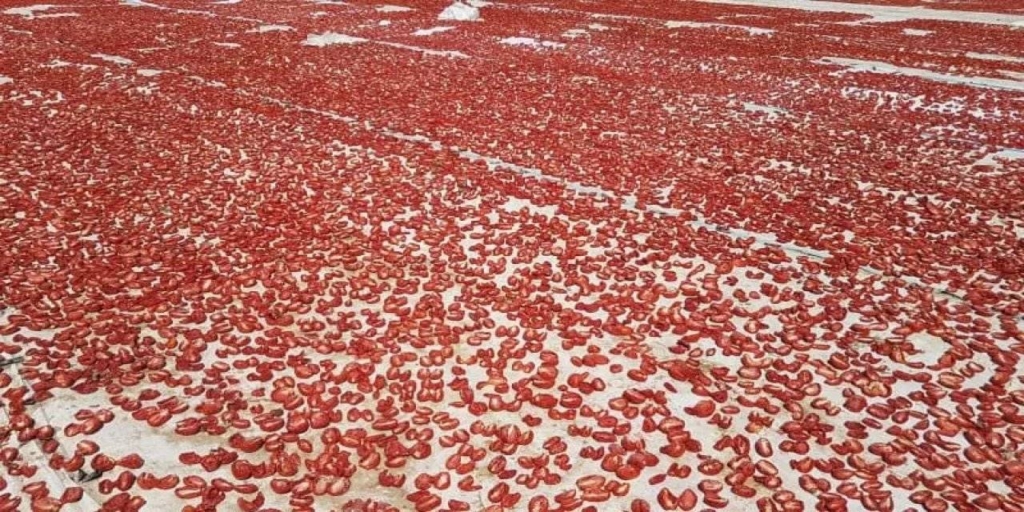

Under the scorching sun of Türkiye’s southeastern plains, an age-old agricultural tradition is being revitalized with modern ambitions. In the rural fields of Diyarbakır’s Çınar district, seasonal workers have begun their intense labor to produce sun-dried tomatoes that will soon reach kitchens across Europe — from British meze platters to Italian pizza sauces.
What may appear to be a simple agricultural activity holds the power to boost rural employment, support sustainable production, and strengthen Türkiye’s food export economy. At the heart of this effort is local entrepreneur Cemil İlik, who has turned the relentless Diyarbakır heat into a business advantage.
The Workday Begins Before Sunrise
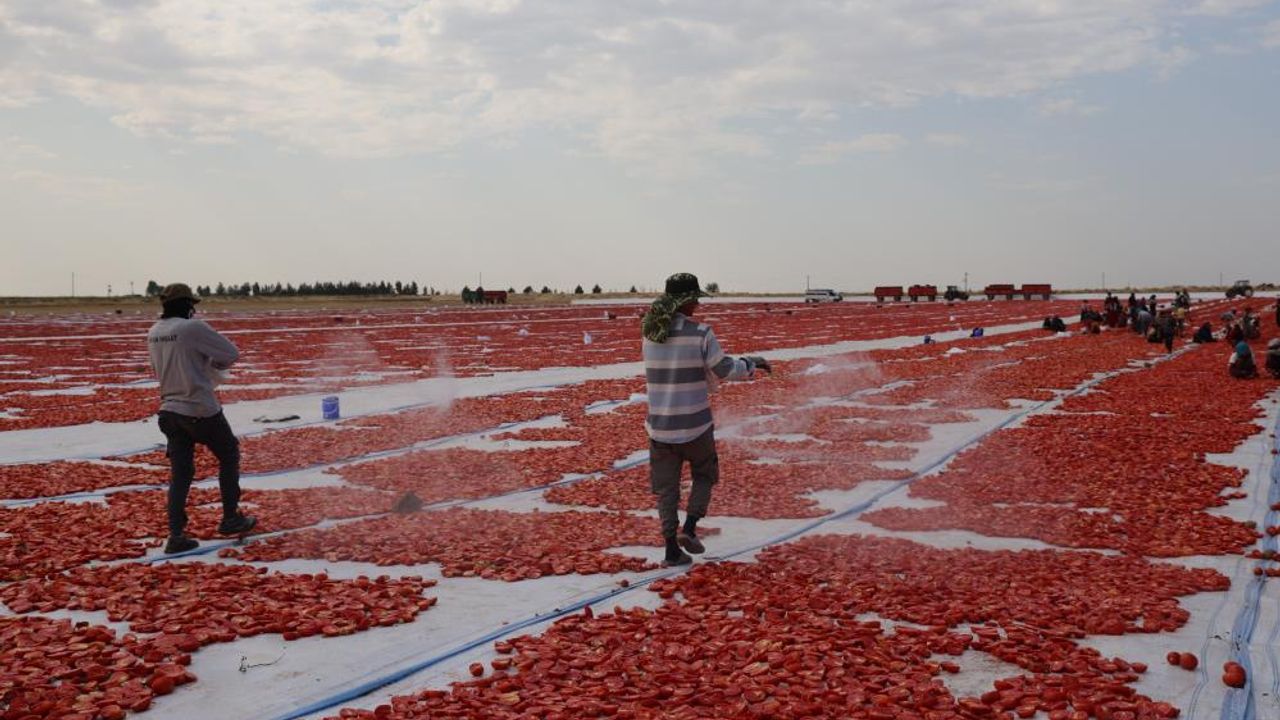
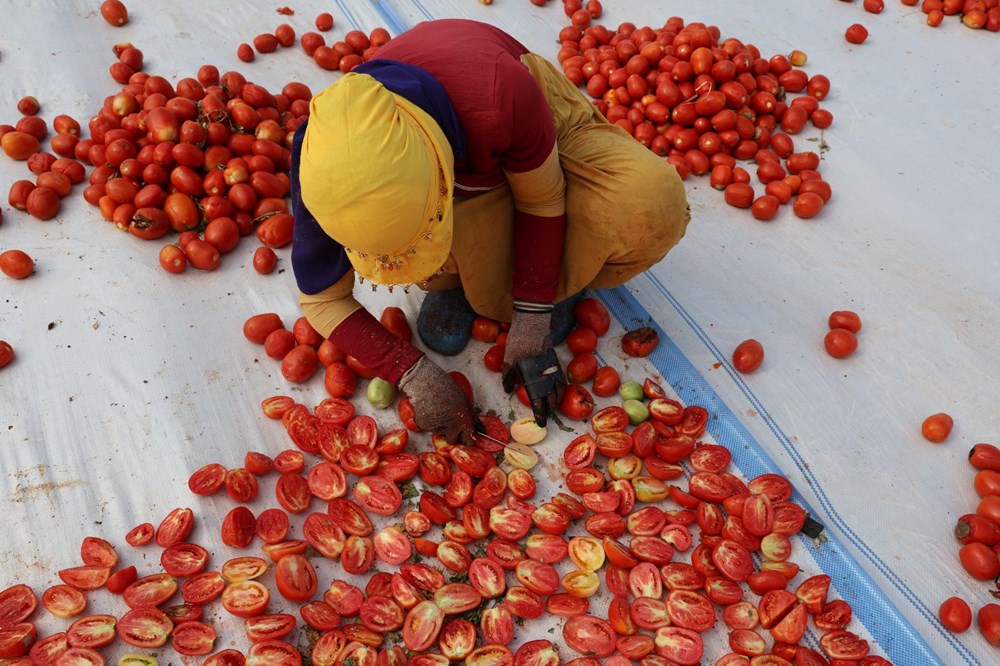
Each day, as early as 5 a.m., seasonal workers equipped with knives and straw hats begin their long shift in open fields. Tomatoes, freshly harvested from surrounding farmlands, are brought in by tractors and trucks. Once on-site, they are carefully sliced in half, salted, and spread out on synthetic fabric to dry naturally under the sun.
The process continues until 7 p.m., often in temperatures that soar above 40°C. For the workers, many of whom are from farming families themselves, this is an opportunity to earn much-needed income during the summer season. The work is physically demanding, but the payoff extends beyond wages — it sustains a growing agricultural export ecosystem rooted in regional tradition.
Local Production, Global Reach
Cemil İlik, who has been in the sun-dried tomato business for over 15 years, relocated part of his operations to Diyarbakır three years ago. According to him, the region offers significant climatic and logistical advantages. “We source tomatoes not only from our own fields but also from nearby producers,” İlik explained. “Once harvested, they’re brought here, processed and left to dry. Afterward, we ship them to our factory in İzmir for final packaging and quality checks.”
From İzmir, the journey continues across borders. These sun-dried tomatoes are exported to several European countries, where they are transformed into high-value food products like antipasti, gourmet sauces, and pizzeria-grade toppings. “Diyarbakır’s sun-dried tomatoes are increasingly in demand,” İlik adds. “The flavor profile is richer, and the drying process here is more efficient compared to other regions.”
Why Diyarbakır Offers a Competitive Edge
Compared to the Aegean region, where sun-drying tomatoes takes up to eight days, Diyarbakır’s intense sunlight shortens the drying period to just five days. This difference not only boosts productivity but also enhances flavor preservation and food safety, reducing the risk of mold or contamination.
This year, İlik and his team aim to produce around 300 tons of sun-dried tomatoes. The operation employs 75 seasonal workers during the peak period, with plans to continue the drying process for approximately six weeks. “We used to focus solely on the Aegean region, but Diyarbakır’s climate makes it more advantageous,” İlik noted. “Faster drying means quicker turnaround and fresher exports.”
Sustainability, Employment, and Economic Impact
Beyond production metrics, the sun-dried tomato initiative in Diyarbakır reflects a broader story of rural revitalization and sustainable growth. Seasonal agricultural work provides a vital income stream for many families, particularly in regions where permanent employment opportunities remain limited. Simultaneously, local farmers benefit from the increased demand for their crops, as they are able to sell produce directly to processors without relying on long-distance distribution chains.
This symbiotic relationship not only uplifts the regional economy but also helps establish Türkiye as a reliable source of high-quality sun-dried tomatoes in international markets. The drying process itself is environmentally friendly — relying solely on natural sunlight and minimal machinery, which significantly reduces the carbon footprint compared to industrial drying methods.
Adapting Tradition to a Global Market
Tomato drying has long been a part of Anatolian agricultural tradition, but adapting this age-old method to serve global gourmet trends is what makes projects like İlik’s so impactful. European consumers are increasingly seeking organic, naturally processed ingredients, and sun-dried tomatoes fit squarely into this demand profile.
In the UK, Türkiye’s sun-dried tomatoes are prized in Mediterranean mezes, deli salads, and vegan dishes. In Italy, they are infused into pasta sauces, baked into artisan breads, or layered onto pizzas for added richness. Türkiye’s agricultural exports thus become culinary ambassadors — telling a story of tradition, climate, and careful craftsmanship with every bite.
The Human Side of the Supply Chain
While the exported products may grace fine dining tables across Europe, it’s important not to overlook the hands that make it possible. For seasonal workers in Diyarbakır, this is more than just a summer job — it’s a source of pride. Many are involved year after year, some bringing along family members and friends as part of a larger communal effort.
Local producers, too, are part of this evolving network. By selling directly to processing units like İlik’s operation, they reduce waste and increase income stability. “This isn’t just about exporting tomatoes,” İlik emphasizes. “It’s about supporting our community, honoring the land, and showcasing what Türkiye can offer the world.”
Looking Beyond the Season
As climate change continues to challenge traditional agricultural practices globally, regions like Diyarbakır may become even more critical to future food security. The area’s suitability for fast sun-drying positions it as a valuable hub for renewable, low-impact food processing.
İlik is optimistic about the coming years. With growing demand from Europe and beyond, he hopes to expand operations, include new product lines such as dried peppers or eggplants, and involve even more local producers. Strategic collaborations with agricultural cooperatives and government-supported export incentives are also on the horizon.
“We believe in what we do,” İlik concludes. “Türkiye has the sun, the soil, and the people. All we need is to keep investing in them.”