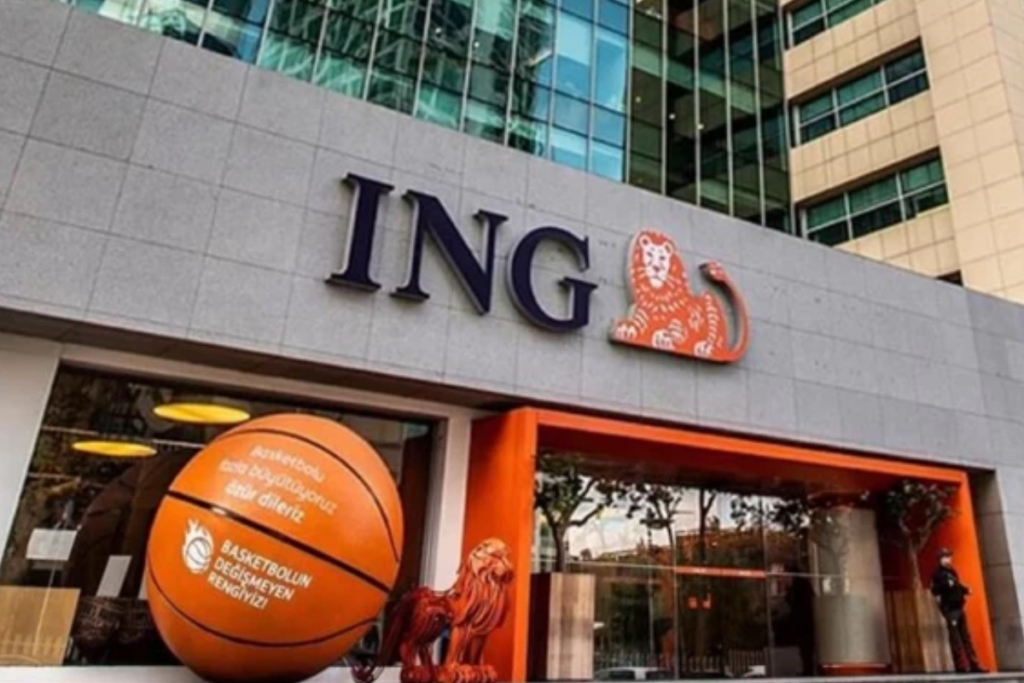

Dutch banking giant ING has released its latest inflation report, projecting that Türkiye’s annual inflation rate will fall below 30% by the end of 2025. The forecast comes amid renewed market scrutiny following the release of July’s inflation data, which many analysts view as a reflection of temporary fiscal measures rather than long-term trends.
In its evaluation note, ING emphasized that although July’s inflation indicators captured the impact of government-administered price hikes and automatic tax adjustments, these effects are expected to be short-lived. The bank believes the underlying inflation trend will continue to decline throughout the remainder of the year and into the next.
A Shift in Momentum After Peak Pressures
Türkiye has experienced a period of persistently high inflation, driven by factors such as currency depreciation, rising energy costs, and aggressive fiscal stimuli. However, ING’s latest assessment signals cautious optimism that monetary tightening and policy normalization may be having a gradual but tangible effect on inflation dynamics.
“The inflation indicators for July largely reflect one-off government price decisions and tax recalibrations,” ING noted in its report. “These impacts are not expected to have a lasting effect on the core inflation trajectory, which is likely to continue trending downward.”
This statement aligns with broader expectations in the financial community that inflation in Türkiye—though still elevated—may have begun to cool as fiscal and monetary authorities adopt stricter measures.
Policy Shifts Driving Core Inflation Improvements
One of the primary factors contributing to ING’s optimism is the Central Bank of Türkiye’s sustained commitment to interest rate hikes and inflation targeting. Since mid-2023, the bank has gradually increased its policy rate, signaling a departure from earlier unorthodox strategies that prioritized growth over price stability.
While this shift initially triggered economic discomfort—particularly among consumers and small businesses—it also helped restore some credibility to Türkiye’s monetary policy framework in the eyes of international investors.
With real interest rates now turning positive and credit conditions tightening, demand-side inflationary pressures have started to subside. ING believes these conditions will help guide inflation below the 30% threshold by late 2025, assuming no major external shocks or policy reversals.
Temporary Effects of Fiscal Adjustments in July
July’s inflation data showed a moderate spike, largely due to government-imposed price hikes and tax revisions. These adjustments, while inflationary in the short term, were implemented as part of a broader fiscal consolidation plan aimed at increasing revenue and narrowing the budget deficit.
According to ING, such moves should not be interpreted as structural inflationary forces. Instead, they represent transitional mechanisms within a longer-term stabilization strategy. “The rise in July inflation is not indicative of a persistent upward trend,” the report clarified.
Market Reactions and Investor Confidence
Global investors have closely monitored Türkiye’s macroeconomic trajectory, particularly in light of its recent efforts to stabilize the lira and rebuild foreign reserves. ING’s forecast may bolster confidence among bondholders and equity investors seeking clarity on inflation and interest rate trends.
A sub-30% inflation environment could also pave the way for renewed capital inflows, improved credit ratings, and lower risk premiums on Türkiye’s sovereign debt—all of which would be beneficial for economic growth and financial market stability.
Remaining Challenges and Fragile Assumptions
Despite ING’s relatively optimistic outlook, the bank also highlighted several risks that could derail progress. These include:
Global commodity price volatility
Geopolitical tensions in the region
A potential reversal in tight monetary policy
Structural imbalances in labor markets and production
Türkiye’s inflation outlook remains heavily dependent on the credibility and consistency of domestic policy as well as the broader international economic climate.
What This Means for Consumers and Businesses
If ING’s projections hold true, the easing of inflationary pressures would offer a much-needed reprieve for Turkish consumers grappling with the rising cost of living. Lower inflation could also translate to more stable prices, renewed household consumption, and improved business planning.
For businesses, a lower and more predictable inflation environment reduces uncertainty in input costs and allows for better capital investment decisions. It may also encourage export competitiveness, particularly if the Turkish lira remains relatively stable.
A Glimmer of Stability on the Horizon
Türkiye’s economic landscape remains complex and fragile, but ING’s report suggests that the country could be turning a corner in its battle against inflation. The combination of tighter fiscal controls, credible monetary policy, and favorable base effects could collectively ease inflation below 30% by the end of 2025.
Such a milestone would not only support financial market stability but also offer hope to millions of households and entrepreneurs looking for predictability in an otherwise turbulent environment.