
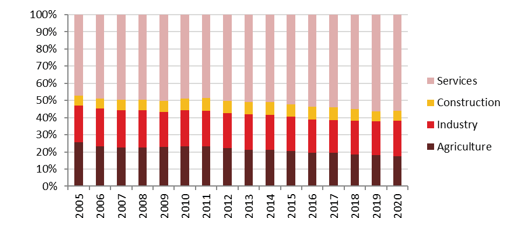
Türkiye’s economic landscape continues to evolve in 2025, with clear signs of a long-term structural transformation in employment distribution across sectors. A recent analysis by Zeynep Yılmaz, an expert at the Central Bank of the Republic of Türkiye (TCMB), highlights that the share of industrial employment is gradually declining, while the service sector is taking a more dominant position. These developments echo global economic trends observed in advanced economies and suggest a deeper shift in Türkiye’s growth model.
In addition to labor market dynamics, the TCMB has also taken notable steps to support financial stability by extending the deadline for firms converting their foreign exchange holdings into Turkish lira. Both developments point to Türkiye’s strategy of aligning economic modernization with macroeconomic resilience.
Service Sector Gains Ground as Industry Employment Falls
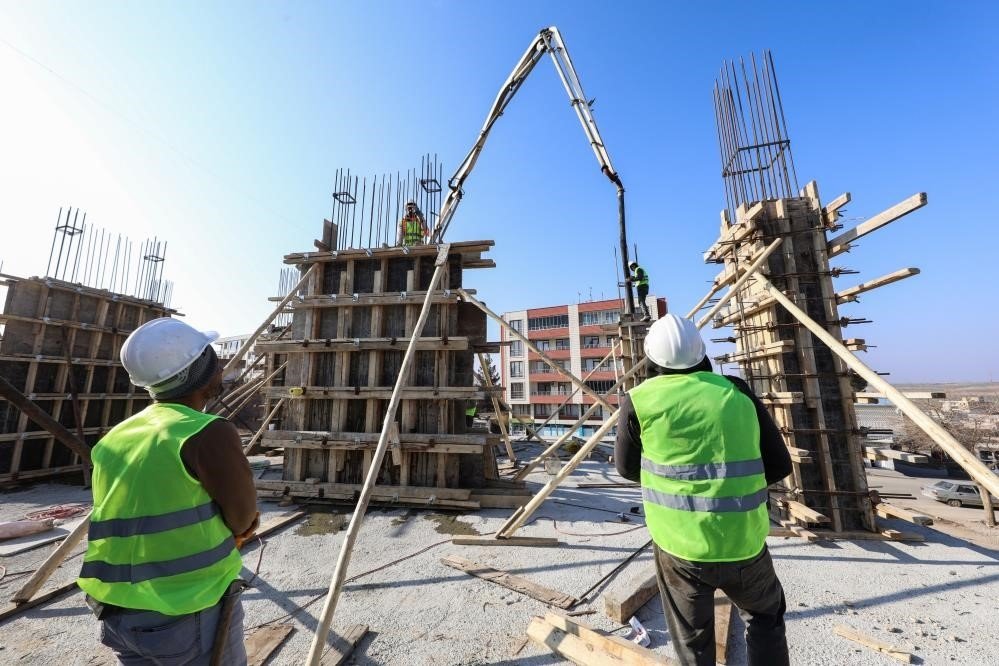
According to the TCMB report, during the latest measurement period in 2025, Türkiye witnessed a net loss of approximately 157,000 jobs in the industrial sector, representing a 3.1 percent decline. Meanwhile, the construction sector added around 83,000 jobs (an increase of 4.6 percent), and the services sector experienced the largest growth with 258,000 new jobs, marking a 2.9 percent increase.
This trend of the services sector gaining ground at the expense of industrial employment is not exclusive to Türkiye. It is a long-term structural feature seen in many high-income countries. As economies grow, increased productivity, technological innovations, and changing consumer preferences lead to a greater demand for services over goods, even if industrial output remains steady or increases.
A Global Convergence in Employment Structure
The report underscores that despite Türkiye still having a relatively high share of industrial employment compared to OECD averages and high-income countries, the gap is closing. Türkiye’s industrial employment share is currently about five percentage points above the OECD average. However, the continuing expansion of the service sector suggests a convergence toward the employment structure of more developed economies.
This shift is attributed to several interrelated factors:
Technological Advancements: Automation and digital technologies have increased industrial productivity, reducing the need for labor.
Global Competition: The globalization of manufacturing processes has led to outsourcing and the relocation of industrial operations to countries with lower production costs.
Changing Consumption Patterns: Modern economies are driven by service-oriented demand, including finance, healthcare, education, logistics, and digital platforms.
As Türkiye continues to advance economically, the expectation is that its employment structure will increasingly resemble those of wealthier nations, with the service sector taking a larger share.
Implications for Policy and Workforce Development
This transformation presents both challenges and opportunities. While the decline in industrial jobs may be a concern for certain regions and demographic groups, the growth in the service sector opens doors for employment in areas such as tourism, technology, education, health, and digital services.
Policymakers are encouraged to:
Invest in education and vocational training programs that align with service sector skills.
Support SMEs and startups in the services industry.
Facilitate labor mobility through social and economic incentives.
Ensure regional equity to prevent job losses in traditional industrial areas from leading to long-term unemployment.

Central Bank Extends FX-to-TL Conversion Incentives to October
In a separate but economically relevant move, the Central Bank of the Republic of Türkiye (TCMB) has announced the extension of its incentive program aimed at encouraging the conversion of foreign exchange (FX) holdings into Turkish lira. According to the official communiqué published in the Official Gazette, the program has been extended from July 31, 2025, to October 31, 2025.
The initiative specifically targets corporate FX holdings originating from international sources. Under this framework, companies that convert eligible foreign currency assets into Turkish lira through local banks receive support under the TCMB’s conversion incentive program.
Boosting Confidence in Turkish Lira
This extension is part of a broader monetary policy effort to increase the use and stability of the Turkish lira within the domestic financial system. The conversion scheme incentivizes businesses to reduce their reliance on foreign currency and support the national currency, thereby contributing to exchange rate stability and reducing dollarization risks.
While the exact structure of the support mechanism has not been detailed in the communiqué, previous implementations included interest rate benefits and reduced reserve requirements for participating banks.
Strategic Importance in 2025 Economic Landscape
Türkiye’s efforts to strengthen its local currency coincide with broader policy reforms aimed at improving financial discipline, attracting foreign investment, and managing inflation. By extending the FX-to-TL conversion program, the TCMB signals its ongoing commitment to currency stabilization and economic continuity during a time of structural shifts in employment and global economic uncertainty.
The move is especially important for firms operating in sectors that are increasingly linked to international markets, such as e-commerce, logistics, and manufacturing. Encouraging these firms to adopt Turkish lira in financial operations also aids in risk management and promotes a more resilient financial ecosystem.
Looking Ahead
Türkiye’s dual-track approach—managing structural employment shifts while enhancing financial resilience—reflects a balanced and forward-looking economic strategy. The transformation in employment patterns suggests a maturing economy that is aligning with global standards, while the financial policies indicate a clear intention to reduce vulnerabilities and improve currency confidence.
As the services sector continues to grow and employment structures evolve, Türkiye’s ability to support workforce adaptation will be key to maintaining inclusive and sustainable growth. On the financial front, the success of the FX-to-TL conversion support program may also serve as a model for future monetary tools aimed at enhancing domestic economic sovereignty.