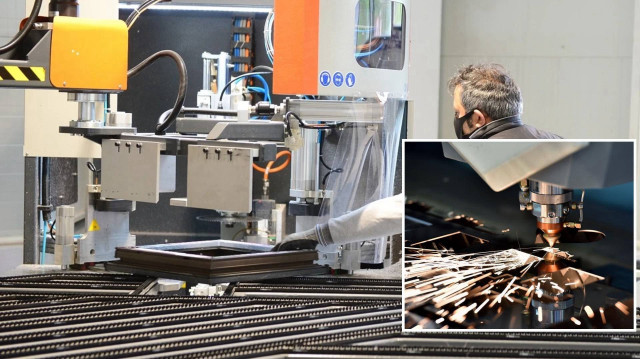

Despite mounting uncertainties in global trade, Türkiye’s machinery manufacturing sector has shown resilience through the first seven months of 2024. According to the latest data shared by the Machinery Exporters’ Association (MAİB), total exports, including free zones, reached 16.2 billion dollars, reflecting a modest 0.9 percent increase compared to the same period last year.
Although the sector recorded a 6.1 percent decline in total volume, the value per kilogram surged by 6.7 percent, reaching 7.9 dollars per kilogram. This trend underscores a noteworthy shift in the sector’s focus toward higher-value, technology-intensive products.
Germany Remains Türkiye’s Top Machinery Market, US and Central Asia Show Strong Momentum
Germany retained its position as the largest destination for Turkish machinery exports, importing 1.8 billion dollars worth of goods in the January–July period. This represents a 1.7 percent year-on-year increase, with July seeing a return to positive momentum in this critical market.
The United States followed as the second-largest market with 1 billion dollars in exports. Notably, Türkiye’s exports to the US jumped by 9.2 percent in July, signaling expanding demand in North America.
Central Asia and North Africa also emerged as rising markets. Kazakhstan saw a 46 percent increase in Turkish machinery imports in July, while Morocco’s demand grew by 37 percent — suggesting Türkiye’s diversification strategy is gaining traction beyond traditional European markets.
Exports to Russia and Poland Weaken, Product Categories Tell a Mixed Story
While many markets remained stable or showed growth, Poland experienced one of the steepest declines in machinery imports from Türkiye, second only to Russia. This dip may reflect shifting procurement patterns or internal industrial slowdowns.
Product-wise, packaging machinery, heating systems, and industrial ovens showed strong gains in July, each posting over 40 percent increases in monthly exports. However, bearings and rubber and plastic processing machines recorded the sharpest declines.
In the broader seven-month period, residential and industrial cooling systems stood out as the largest export group, growing by 4.7 percent — a sign of Türkiye’s growing capacity in HVAC and refrigeration technology.
Karavelioğlu: Global Trade Architecture Is Being Redrawn Under Pressure
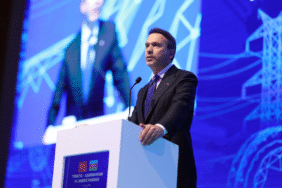
Commenting on global trade trends, Kutlu Karavelioğlu, President of MAİB, stated that the evolving US-EU trade dialogue reflects a broader restructuring of global economic dynamics. As the United States under former President Trump threatened secondary tariffs on countries trading with Russia, his policy decisions, such as imposing a 50 percent tariff on Indian imports, show a willingness to deploy tariffs as strategic tools.
Karavelioğlu pointed out that the European Union, despite initiating negotiations with strong rhetoric, ultimately adopted a pragmatic stance, accepting short-term losses to ensure long-term market stability. He emphasized that these developments may burden the European manufacturing base, impacting Türkiye as a key supplier.
Still, Karavelioğlu remains cautiously optimistic about Germany’s relative insulation from these disruptions and does not foresee immediate negative consequences for Türkiye’s machinery exports to this critical partner.
Global Indicators Reflect Fragile Recovery Amid Ongoing Trade Uncertainty
Despite optimism over softening recession expectations, Karavelioğlu noted that the global industrial PMI returned to contraction territory in July. This suggests that uncertainty around trade tariffs and prolonged negotiations may be suppressing real production more than expected.
However, positive forecasts from the World Trade Organization (WTO) regarding nominal trade growth provide a welcome counterbalance. Still, the ongoing decline in new orders suggests that even with clearer tariff frameworks in the near future, pressure on manufacturing, investment, and employment may persist for some time.
EU Import Surveillance and Türkiye’s Position in the Heat Map
A critical issue raised by Karavelioğlu is the European Commission’s Import Monitoring Working Group, which published its third heat map report this year. The report tracks unusual surges in import volumes and flags both products and origin countries for further review.
Karavelioğlu noted that while Türkiye is not seen as a threat due to its alignment with EU norms and quality standards, its inclusion in the list of monitored countries raises questions about the future of the Customs Union modernization process and the flow of third-country goods through Türkiye.
The heat map found that Türkiye’s export growth in machinery and after-sales services remains below the EU average, while China’s increase is significantly above average — a trend that Turkish policymakers and exporters must address urgently.
Revival of Machinery Imports Highlights the Need for Financial Support
Karavelioğlu also warned that machinery imports to Türkiye, which had previously declined over the past 12 months, showed a sharp rebound in recent months. In June 2024 alone, imports surged by 15.4 percent — a development that could put domestic manufacturers at a disadvantage.
Of particular concern is the 18.1 percent increase in machinery imports from China in the first half of 2024. This trend highlights Türkiye’s continued dependency on Chinese supply chains, despite mounting global efforts to diversify away from them.
To address this, Karavelioğlu stressed the need for long-term strategies that boost local investment and production capacity, particularly in high-tech sectors, to prevent structural import dependency.
Access to Affordable Finance Is Critical for Sustaining Growth
With the sector doubling its production and increasing exports by 50 percent over the last five years, the machinery manufacturing industry now faces rising operational capital demands. Karavelioğlu argued that allocating resources to meet these needs would not trigger inflation, but instead sustain industrial momentum.
He also echoed TİM’s (Turkish Exporters Assembly) latest message, “Our business is production, our power is exports,” emphasizing that Türkiye’s long-term export success relies on a productive and stable business environment.
Karavelioğlu concluded that unrestricted and affordable access to financing is now essential for Türkiye’s machinery sector to maintain its growth trajectory in a rapidly changing global economic landscape.