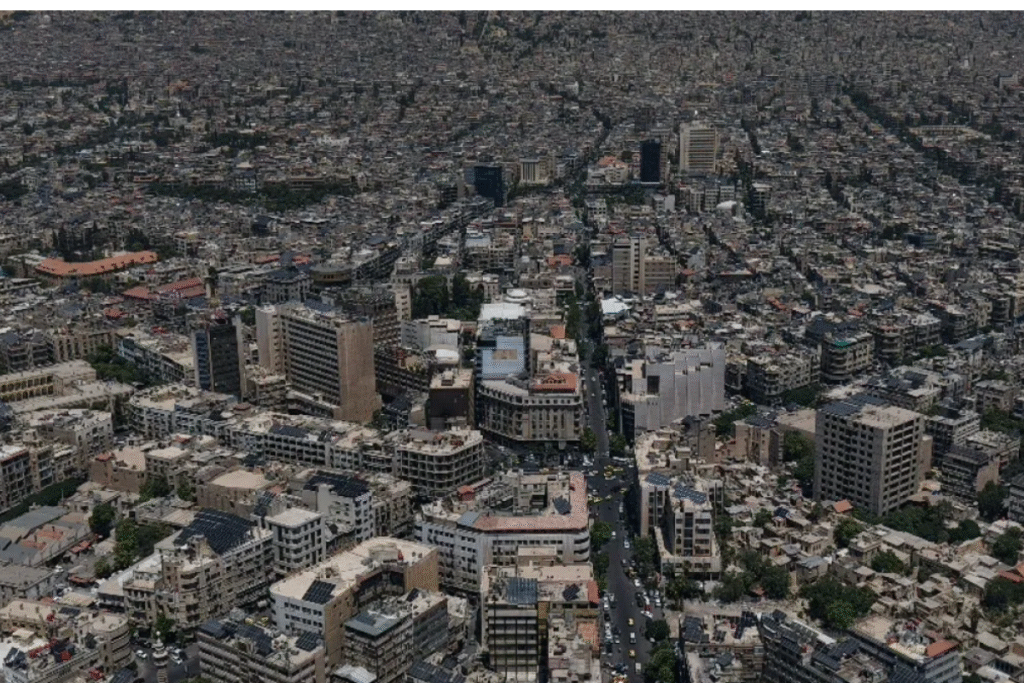

Syria is embarking on one of its most ambitious urban development projects to date with the announcement of the “Damascus Towers” initiative, a transformative investment aimed at reshaping the skyline of the capital city. The project, which includes dozens of high-rise buildings and luxury facilities, marks a turning point for a country long paralyzed by war and economic sanctions.
Details of the mega project were officially revealed by SANA, Syria’s state-run news agency, reflecting a renewed commitment to economic revitalization and international cooperation.
A New Chapter for Damascus
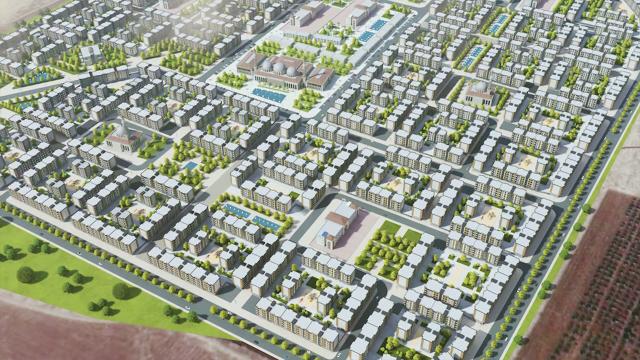
According to the announcement, the Damascus Towers development will include more than 60 residential and commercial towers, each reaching up to 25 stories in height. The crown jewel of the project will be the “Royal Butterfly Towers”, a set of four skyscrapers rising up to 45 stories, intended to be the tallest buildings in Syria and among the most iconic structures in the Middle East.
The architecture of the towers is designed to reflect both modern luxury and traditional aesthetics, aiming to symbolize a new era for Syria — one of reconstruction, prosperity, and global reintegration.
Beyond Housing: Lifestyle, Leisure, and Luxury
Far more than a residential complex, the Damascus Towers will serve as a multi-purpose lifestyle destination, integrating luxury living with world-class leisure and retail amenities. Among the highlights:
An 18-hole international golf course, built to championship standards
Five-star hotels catering to global travelers and business executives
A high-end shopping mall featuring international fashion and lifestyle brands
A horse riding facility and shooting range, offering elite recreational options
Public parks, fountains, and cultural centers designed to enhance community engagement
The project is expected to become a beacon for luxury real estate development in the region, aimed at attracting both regional investors and the Syrian diaspora seeking to reconnect with their homeland.
Massive Job Creation for Syrian Citizens
Perhaps the most impactful aspect of the Damascus Towers project is its employment potential. Officials estimate that the initiative will create over 200,000 jobs across various phases:
100,000 during the construction phase, including engineers, laborers, designers, logistics staff, and subcontractors
Another 100,000 jobs are expected to be created in the operational phase, spanning hospitality, maintenance, retail, administration, and more
The sheer scale of job creation could provide a significant boost to Syria’s recovering economy, particularly in urban areas like Damascus, where unemployment remains a major concern.
No Timeline Yet, But Optimism Runs High
Although authorities have not provided a specific construction timeline, planning officials and project developers expressed optimism about the swift mobilization of resources, especially after recent international agreements.
The lack of a fixed schedule hasn’t dampened investor enthusiasm. On the contrary, developers believe that the visibility of such a landmark project will encourage further foreign direct investment (FDI) into Syria’s urban development, tourism, and infrastructure sectors.
Part of a Broader National Investment Strategy
The Damascus Towers initiative is just one pillar of a broader investment wave sweeping across Syria in 2025. The government has recently signed multiple multi-billion-dollar agreements with international partners, aiming to rebuild the nation’s infrastructure and reintegrate into the global economy.
One notable deal includes a $4 billion memorandum of understanding (MoU) signed with a Qatari-led consortium to expand and modernize Damascus International Airport. This project is expected to position the Syrian capital as a key regional aviation hub, facilitating increased trade and tourism.
Another major agreement involves UCC Holding, leading an international coalition of energy firms to develop $7 billion worth of electricity production projects, critical for powering new developments like the Damascus Towers and reducing the country’s chronic energy shortages.
The Geopolitical Shift: Sanctions Eased, Investments Flowing
Syria’s recent investment surge has been largely enabled by a dramatic shift in U.S. foreign policy. In May 2025, President Donald Trump announced a historic rollback of certain economic sanctions on Syria during his visit to Riyadh. The decision signaled a new era of diplomatic normalization and economic opening, particularly for Middle Eastern stakeholders seeking to re-engage with Syria’s vast reconstruction opportunities.
The lifting of sanctions has allowed major infrastructure and real estate deals to be fast-tracked, providing essential financing and technical partnerships that were previously impossible due to Western restrictions.
For Syrian officials, this is a long-awaited breakthrough. “We are welcoming back the world,” one senior government representative stated during the SANA announcement. “Syria is open for business, and the Damascus Towers project is proof of that transformation.”
Strategic Location and Global Ambitions
The project’s location in the heart of Damascus adds to its symbolic and strategic importance. Situated near major transportation routes, commercial zones, and diplomatic enclaves, the Damascus Towers are intended to serve as a landmark not only for the city but for the entire region.
The government hopes the project will:
Reinforce Syria’s regional influence in real estate, tourism, and finance
Attract global brands and hospitality chains looking to establish a presence
Serve as a platform for international cultural and economic exchange
Showcase Syria’s architectural talent and urban planning capabilities
Rebuilding with Purpose and Vision
More than a construction project, Damascus Towers represents a national narrative of recovery. After more than a decade of conflict, the initiative symbolizes resilience, ambition, and a collective push toward renewal.
The integration of eco-friendly materials, smart building systems, and earthquake-resistant design highlights the country’s dedication to modern construction standards and sustainability. Developers have also hinted at incorporating solar energy grids and rainwater recycling systems into the complex.
Public Reaction and Investor Sentiment
Early reactions from the Syrian public have been mixed. While many see the project as a symbol of hope and economic potential, others are skeptical about the prioritization of luxury housing in a country still grappling with poverty and basic infrastructure challenges.
International investors, however, have shown notable interest. Real estate firms from the Gulf region, Russia, China, and even parts of Europe are reportedly in talks with project stakeholders for potential co-development opportunities.
A Towering Step Toward a New Syria
The launch of the Damascus Towers project could prove to be a watershed moment for Syria’s post-conflict development strategy. With its luxurious design, economic potential, and geopolitical significance, the project holds promise as a catalyst for broader transformation.
If successful, Damascus Towers may not only reshape the skyline of Syria’s capital — it may also redefine the country’s future on the global stage.