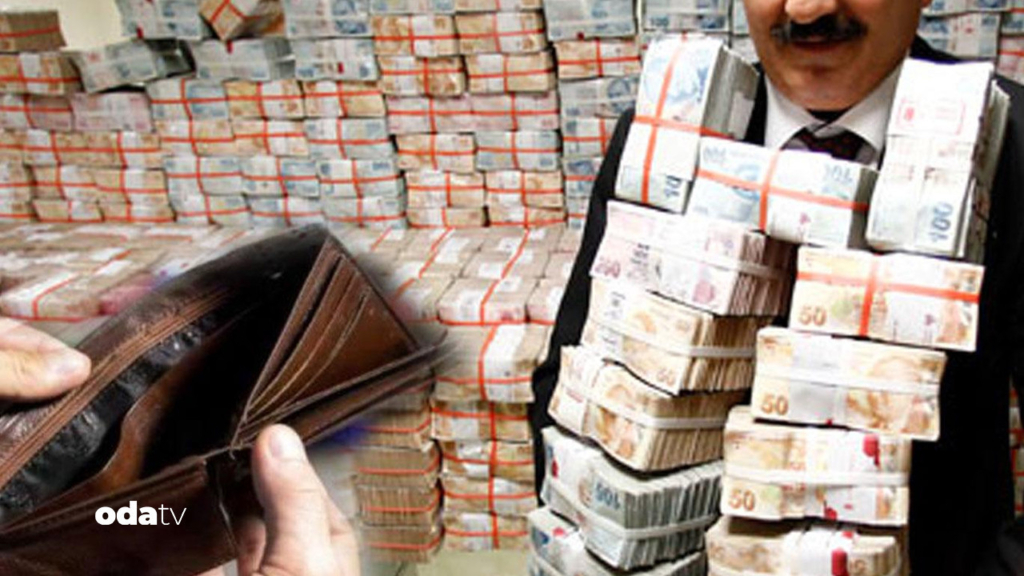

In July 2025, the number of people in Turkey holding more than 1 million TL in their bank accounts surpassed 2.36 million. According to data from the Banking Regulation and Supervision Agency (BDDK), the combined deposits of these millionaires reached 17.4 trillion TL, with an average per capita asset of 7.3 million TL. At first glance, this figure suggests that wealth in Turkey is growing. However, a closer look reveals a more complicated reality. Rather than signaling prosperity for the general population, the rise in the millionaire class underscores the deepening divide between the wealthy and the poor.
Ulvi Saran, columnist for Karar newspaper, addressed this issue in his commentary titled “We Now Have Almost 2.5 Million Millionaires. Did We Get Richer?” He argued that the increase in millionaires does not reflect an improvement in overall welfare but instead highlights the widening gap between social classes.

The Surface Numbers
The raw figures are striking. As of July 2025, the distribution of deposits among Turkey’s millionaires is as follows:
11.4 trillion TL held in Turkish lira deposits
4.7 trillion TL in foreign currency accounts
1.3 trillion TL in precious metals deposits
On paper, these figures indicate enormous nominal growth. Yet they must be evaluated in light of Turkey’s persistently high inflation.
Nominal Versus Real Wealth Growth
Economic experts point out that a significant portion of this apparent wealth increase is not real but nominal. With annual inflation approaching 50% during the 2024–2025 period, the rise in millionaire deposits partly reflects the loss of the Turkish lira’s purchasing power rather than genuine enrichment.
In practical terms, an individual labeled a “millionaire” in Turkey may not enjoy the same financial strength as a millionaire in stronger economies like Germany. While Turkey now counts around 2.4 million TL millionaires, Germany—with a similar population—has about 2.8 million euro millionaires. But considering that Germany’s GDP per capita is nearly four times higher and that the euro is significantly stronger than the lira, Turkish millionaires often fall closer to middle-class status in international terms.
Flight from the Lira
The distribution of assets also reveals deep mistrust in the lira. Despite high interest rates offered on TL deposits, many savers prefer foreign currency and gold as a hedge against volatility. The 4.7 trillion TL held in foreign currency accounts demonstrates the public’s persistent lack of confidence in local monetary policy.
This trend aligns with a well-documented pattern: in times of economic uncertainty, people flock to safe havens like gold and foreign currency. In Turkey’s case, the growing share of deposits held outside the lira also reflects structural issues—such as reliance on imports, vulnerability to currency shocks and chronic inflation—that continue to undermine faith in the domestic currency.
Wealth Concentration and the Gini Coefficient
According to data from TÜİK and the World Bank, Turkey ranks among the top three OECD countries in terms of income inequality. Its Gini coefficient hovers around 0.41, significantly higher than the OECD average of 0.32. This indicates that wealth in Turkey is concentrated within a narrow segment of society, leaving much of the population struggling.
Further, Turkey’s household savings rate remains below 10%. This low figure means that the majority of middle- and lower-income families have little capacity to save, leaving them vulnerable to inflationary pressures and economic shocks. Meanwhile, the wealthy continue to accumulate assets, often shielded from inflation through investments in real estate, foreign currency, gold and financial instruments.
Global Wealth Comparisons
A 2025 report by UBS highlighted the discrepancy between nominal and real wealth in Turkey. While nominal per capita wealth grew by 35% in 2024, once adjusted for inflation, the average real wealth declined by 14.6%, and the median wealth fell by more than 21%. This suggests that while the wealthiest segments of society are expanding their fortunes, the majority—particularly middle- and lower-income groups—are becoming poorer in real terms.
For most households, wages and savings held in lira have not kept pace with rising prices, leaving them worse off despite official growth figures. This widening gap underscores a polarizing economic dynamic where the wealthy protect and even grow their assets, while the rest of society struggles with declining purchasing power.
Implications of Wealth Inequality
The rise in millionaires and their ballooning deposits paints a picture of a two-tier economy. On one side, the affluent elite consolidate wealth through resilient assets. On the other, the middle class shrinks, unable to maintain savings or long-term financial stability.
This dual structure has several implications:
Economic fragility: Heavy reliance on foreign currency and precious metals makes the banking system more vulnerable to currency shocks.
Social polarization: Widening inequality deepens divides between the wealthy and the poor, eroding the sense of shared prosperity.
Political instability: As history has shown globally, sharp income inequality can drive political unrest and fuel populist movements.
Migration pressures: Economic despair among lower-income groups often translates into increased emigration, particularly among the young and educated.
Structural Challenges Behind the Numbers
Turkey’s growth model, heavily reliant on consumption and external borrowing, exacerbates inequality. The lack of emphasis on high-tech, value-added and productivity-driven production channels wealth toward speculation, rentier activities and financial maneuvering, rather than broad-based economic development.
Moreover, while social assistance programs exist, they remain insufficient to protect low-income families from the full brunt of inflation. Taxation also worsens inequality: wage earners face automatic income tax deductions, while capital gains and high-wealth income streams often benefit from exemptions and loopholes.

Reforms Needed for a Fairer Distribution
Experts argue that reversing this trajectory requires comprehensive reforms, including:
A fairer tax system that places greater responsibility on wealth and capital gains
Strengthening value-added production and technological innovation to broaden income distribution
Credible monetary policies to restore trust in the lira and stabilize inflation
More effective social policies to support vulnerable populations and protect the shrinking middle class
Without such reforms, Turkey risks cementing a “club of the wealthy” while the majority faces declining living standards.
Editorial Note
The surge in millionaires does not necessarily indicate national prosperity. Instead, it highlights the contradictions of Turkey’s economic landscape, where inflation, inequality and structural weaknesses overshadow nominal wealth gains. The millionaire statistics, rather than proving enrichment, reveal how fragile the middle class has become. Unless addressed through systemic reforms, the current path could lead to deeper economic fragility and sharper social divisions.