
Free zones across Türkiye have become a driving force behind the country’s export-oriented growth strategy, offering businesses tax advantages, flexible regulations, and a gateway to global markets. These zones are technically located within the national borders but are treated as outside the customs territory. As such, many of the legal, commercial, and economic regulations applicable throughout the country are either not enforced or only partially implemented in these areas. This creates a favorable climate for industrial and commercial operations, boosting international competitiveness and innovation.
Why Free Zones Are Key to Türkiye’s Economy
The core mission of free zones is to stimulate investment and production for export, while also attracting foreign capital and cutting-edge technologies. By offering incentives such as customs exemptions, simplified bureaucracy, and tax benefits, free zones play a crucial role in positioning Türkiye as a trade hub. These zones encourage companies to scale their operations, adopt modern technologies, and focus on global markets. Moreover, they strengthen skilled employment opportunities, contributing to both the local and national economy.
The free zone model in Türkiye was introduced in 1987 and has been operating successfully for almost four decades. Over this period, free zones have helped increase the volume of international trade and expand the country’s export portfolio. Today, there are 19 active free zones strategically distributed across different regions.
Where Are Türkiye’s Free Zones Located
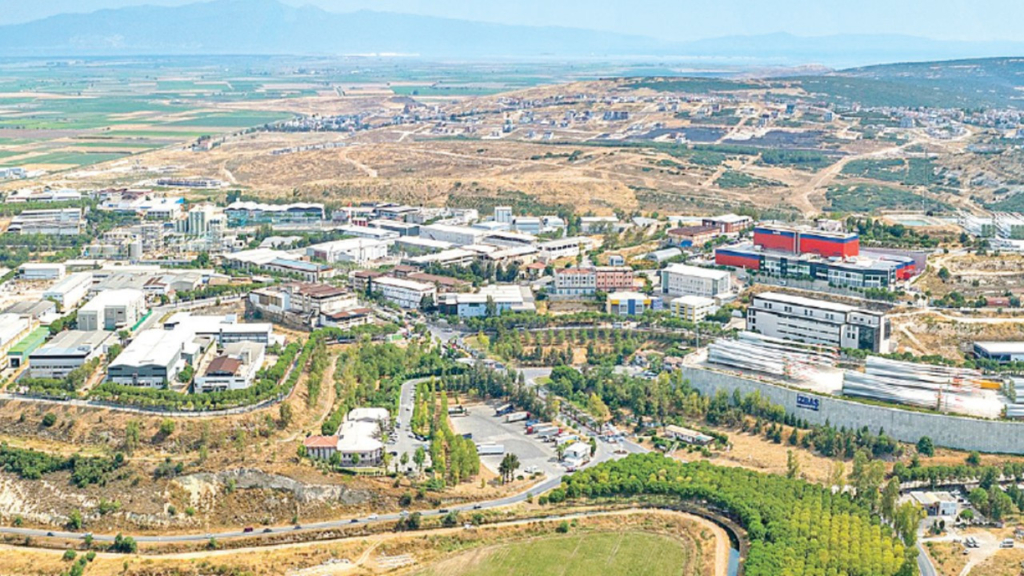
Türkiye’s free zones are positioned to maximize access to ports, industrial centers, and trade corridors. Along the Mediterranean coast, Mersin, Antalya, and Adana-Yumurtalık free zones serve as key gateways for trade. In the Aegean region, zones include Ege (Izmir), Denizli, Izmir, and Western Anatolia. Marmara, Türkiye’s industrial heartland, hosts a diverse set of free zones such as Istanbul Specialized, Istanbul Industrial and Trade, Istanbul Thrace, Europe, Kocaeli, Tübitak-MAM Technology, and Bursa.
On the Black Sea coast, there are free zones in Trabzon, Rize, and Samsun, while the Southeast is home to the Gaziantep Free Zone. In Central Anatolia, the Kayseri Free Zone facilitates trade and production in the region. This geographic diversity ensures that Türkiye’s free zones support a wide variety of industries and supply chains.
Close to 3,000 Companies Operate in Free Zones
Following the enactment of the Free Zones Law in 1985, the model was quickly implemented, helping Türkiye expand its export capacity. In the 2000s, the popularity of these zones soared, with their number temporarily reaching 21. However, as economic realities dictated, not every initiative succeeded, and some zones were merged or closed.
As of 2024, official data from the Ministry of Trade indicates that 2,970 companies operate within Türkiye’s free zones. Of these, 2,222 are domestic firms, while 748 are foreign-owned enterprises. These businesses operate across various sectors, with 1,291 companies engaged in manufacturing, 998 focused on trade and distribution, and 681 active in other specialized activities. The diversity of industries highlights the flexibility and attractiveness of free zones as a platform for both local and international players.

Export Performance and Trade Flow
One of the defining features of free zones is their role as international trade corridors. Trade flows occur in four primary directions: from domestic markets to free zones, from free zones to international markets, from foreign markets to free zones, and from free zones back to domestic markets.
In 2024, the most significant share of trade, 43.3 percent, involved exports from free zones to foreign countries, amounting to 11.99 billion dollars. Imports from foreign markets into free zones followed with a 28.5 percent share, totaling 7.9 billion dollars. Trade from free zones back into Türkiye accounted for 15.1 percent with 4.17 billion dollars, while the smallest flow, from domestic markets into free zones, reached 3.61 billion dollars, representing 13.1 percent of the total.
This structure shows that nearly half of the commercial activity in Türkiye’s free zones is directed toward international markets, underscoring their vital role in the country’s export-driven economy.
Record-High Export Figures in 2024
The total trade volume of free zones in 2024 was recorded at 27.69 billion dollars. Of this, 12 billion dollars came from exports, resulting in a foreign trade surplus of 4.1 billion dollars. Free zones have thus become one of the few areas within Türkiye’s economy that consistently achieve a positive trade balance.
Employment generation is another key advantage. The 19 active free zones provide jobs for approximately 93,000 people, covering a wide range of skill sets, from technical and industrial roles to logistics and service functions.
In the first half of 2025 alone, the trade volume of free zones reached 13.82 billion dollars, with exports standing at 6.1 billion dollars. These figures suggest that 2025 could surpass previous years in both total trade and export performance.
Technological Advancement and High-Value Exports
Free zones are not just about facilitating trade; they also play a critical role in upgrading Türkiye’s industrial capacity. The share of medium-high technology products in exports reached 47.7 percent, while high-tech products accounted for 8.3 percent. Together, these categories made up 56 percent of total exports in 2024, up from 52.37 percent in 2023.
This trend illustrates how free zones are evolving from being simple logistics or trade hubs into advanced manufacturing ecosystems. By supporting research, development, and innovation, these zones align with Türkiye’s ambition to become a global technology and production leader.
Why Foreign Investors Prefer Türkiye’s Free Zones
Foreign direct investment is a key component of free zones’ success. The combination of strategic location, skilled workforce, tax incentives, and streamlined regulations attracts investors from Europe, Asia, and the Middle East. Many foreign companies use Türkiye’s free zones as a manufacturing base to export goods to the EU, leveraging Türkiye’s customs union and trade agreements.
Moreover, the availability of modern infrastructure and proximity to ports and airports adds significant logistical advantages. With ongoing infrastructure projects, including new port facilities and expanded road networks, these benefits are expected to grow even further in the coming years.
Challenges and Future Prospects
While free zones have been a success story, there are still challenges. Increasing global competition, fluctuating exchange rates, and changing international trade rules can impact their performance. Analysts suggest that focusing on digitalization, automation, and sustainable practices will be crucial to maintain competitiveness.
The government’s plans to enhance high-value industries, renewable energy production, and green logistics within free zones could further boost their strategic importance. Incentives for R&D and startups are also expected to create a new wave of innovative businesses operating within these regions.
The Future of Free Zones in Türkiye
Looking ahead, Türkiye aims to continue expanding the role of free zones as engines of growth. By strengthening partnerships with foreign investors and supporting local entrepreneurs, these zones could play a central role in reaching the country’s export targets for 2030.
Additionally, the integration of smart manufacturing, artificial intelligence, and blockchain technologies in supply chain management is on the agenda. Such advancements could increase transparency, efficiency, and trust in trade operations, giving Türkiye an even stronger competitive edge in global markets.
Free zones have proven that strategic planning, combined with robust infrastructure and regulatory support, can transform entire sectors. With their emphasis on exports, technology, and workforce development, they remain a cornerstone of Türkiye’s long-term economic vision.